

#80 Building With Agents 🤖
This issue, our serverless expert is AWS Serverless Hero Gunnar Grosch, and our spotlight is on AWS Principal Developer Advocate Sébastien Stormacq.


Welcome
In the last issue, our serverless expert was AWS Principal Specialist Solutions Architect for AI Software Development Lifecycle Sascha Möllering, and our spotlight fell on AWS Developer Advocate Elizabeth Fuentes Leone!
This issue, our serverless expert is AWS Serverless Hero Gunnar Grosch, our spotlight is on AWS Principal Developer Advocate Sébastien Stormacq, and we look at the latest AWS service releases, blog posts, hints and tips, news, and more!
This week’s newsletter is sponsored by Study From Experts, The Exclusive Home of AWS Deep-Dive Mastery. Gain access to a private library of advanced courses from the world’s most renowned AWS experts, with content so specialised, you won’t find it on any other platform.

📰 Articles that caught the eye
Here are some stand-out articles I read during the past two weeks in the World of Serverless, AI, engineering and architecture!

⭐ My favourite article this week is by Morgan Willis, AWS Developer Advocate, titled ‘Inference Theft: Your AI Endpoint Is Someone Else’s Free Model’. A brilliant read on how an exposed AI endpoint can be quietly repurposed as someone else’s free model!
Pubudu Jayawardana covers ‘Triggering Lambda Durable Functions from SQS’, explaining the 15-minute ceiling event source mappings impose on durable functions, and why EventBridge Pipes can be a cleaner option than an intermediary Lambda.
Houssem Ben Slama continues his AWS AI Series with ‘From Laptop to Prod: Deploy Your RepoScout Agent to Bedrock AgentCore Runtime’, walking through shipping a Strands agent to a managed, per-session microVM runtime with barely any code changes.
Adam Bieganski has a wonderfully cathartic piece titled ‘Why Is Everything Fckn Broken…’, a real-world rant on broken SMS links, airline refund loops, and useless AI chatbots that perfectly captures the state of modern UX.
Anastasiia Kuten at Cloudvisor has written ‘What Is the AWS MCP Server? A Complete Guide for AI Engineers (2026)’, a practical guide covering what the managed AWS MCP Server is, how it works, pricing, setup, and the security implications.
Chris Church, Solutions Architect at AWS, covers ‘Your AWS Bill Is a Codebase — Treat It Like One’, sharing a four-tier CloudWatch alarm pattern with an automated kill switch to stop runaway agentic costs before they hurt.
Ryan Cormack, AWS Community Builder, has ‘ACP and Strands - an open source match’, showing how to expose a Strands agent through the Agent Client Protocol.
Muhammad Awais covers ‘Building an Autonomous E2E Test Generation Framework with Kiro CLI’.
Steph Gooch, AWS, has a fun thought experiment titled ‘The Hidden Cost of “Hey”’, on how a single polite token, multiplied by context-window replay and a hundred thousand users, becomes a real line item, and the case for “prompt hygiene” at scale.
Matheus das Mercês covers ‘Building a Serverless, Multi-Backend Web Search Service for AI Agents on AWS‘.
Kyler Middleton at Let’s Do DevOps covers ‘Designing Specialised Agents - Model Selection, Tool Scoping, and Output Contracts’, a great deep dive into configuring sub-agents with the right model, tool boundaries, and structured output contracts.
Kenta Goto has a great article titled ‘Understanding AWS Blocks as a CDK Developer‘ which is worth checking out.
And finally, Scott Feinberg has ‘Building with Autonomous Agents: A Very Efficient Way to Be Wrong’, framing autonomous coding as two independent dials, verification and autonomy, and why you should always climb the verification dial first.
🎓 Ask the Expert
Each issue, I ask a different AWS expert the same three questions to get their personal insights. This issue, we have AWS Serverless Hero Gunnar Grosch:

Opinions are the author’s and do not express the views of their employer.
1. What is one common mistake you see teams making when building their solutions, and how can they avoid it?
The most common mistake I see is assuming managed infrastructure means resilient by default. It doesn't. You have to opt in. For asynchronous invocations, Lambda delivers events at least once, so your handlers need to be idempotent. Without Dead Letter Queues, Lambda Destinations for async failures, and partial batch failure reporting on SQS and Kinesis, failed events disappear silently or loop indefinitely on poison records. Service selection makes this worse: teams reach for Lambda where Step Functions or Lambda Durable Functions would handle orchestration and failure recovery more cleanly, or use synchronous tight coupling where SQS or EventBridge decoupling would contain failures much better. Resilience in serverless is a deliberate design decision, not a property of the platform.
2. Which tool, package, or AWS service are you most excited about right now, and why?
Lambda Durable Functions. The deployment story for long-running agent workflows has always been awkward, and it gets worse when those agents are coordinating over real communication channels. An AI agent that sends a message, waits for a human reply, and follows up if there's no response isn't a simple request-response flow. It spans minutes or hours. The same goes for voice flows where an agent needs to orchestrate a call, process what was said, and act on the result. The standard Lambda execution model just doesn't fit either. Durable Functions changes that. The checkpoint-and-replay model means a coordinator can invoke specialists, wait for a human response, and resume exactly where it left off, with up to a year of execution time. It's still early, and the patterns are evolving, but for agentic workloads that interact with real people over messaging and voice, it's the most interesting Lambda feature in years.
3. What is your favourite trick or tip that the readers may find interesting?
Most teams test the happy path thoroughly but never verify how their system behaves when things go wrong. Do your retries back off correctly? Does a slow downstream service cause a queue to back up? Does your circuit breaker trip at the right threshold? Deliberately testing those failure scenarios before they hit production surfaces more issues than months of normal operation. I built failure-lambda for exactly this: it lets you inject latency, errors, and network failures into any Lambda function via a Layer with zero code changes. Pick one failure mode you've never actually tested and try it this week. You might be surprised by what you find.
Check out our latest course on the Study From Experts platform: “Architecting Java Systems in the Cloud“ by Sascha Möllering

Overview:
This course explores how to design and understand modern Java systems in cloud environments. Using the AcmeCorp Platform as a realistic microservices reference architecture, we examine architectural decisions around service boundaries, data access, and containerised deployments. You will instrument applications with Prometheus metrics and analyse system behavior through Grafana dashboards to identify issues such as inefficient queries and startup bottlenecks. We also explore the evolution of the JVM from Java 11 to 21+ and evaluate techniques like AppCDS, CRaC, and native images. Throughout the course, you will learn how to create reproducible benchmarks and reason about the interaction between architecture, observability, and the JVM.
🧠 Tips & Tricks
This issue, our tip or trick comes from Sandro Volpicella on LinkedIn, who points out that most developers manage their AWS credentials in ways that are riskier than they realise, and shares a cleaner, safer approach to handling them.
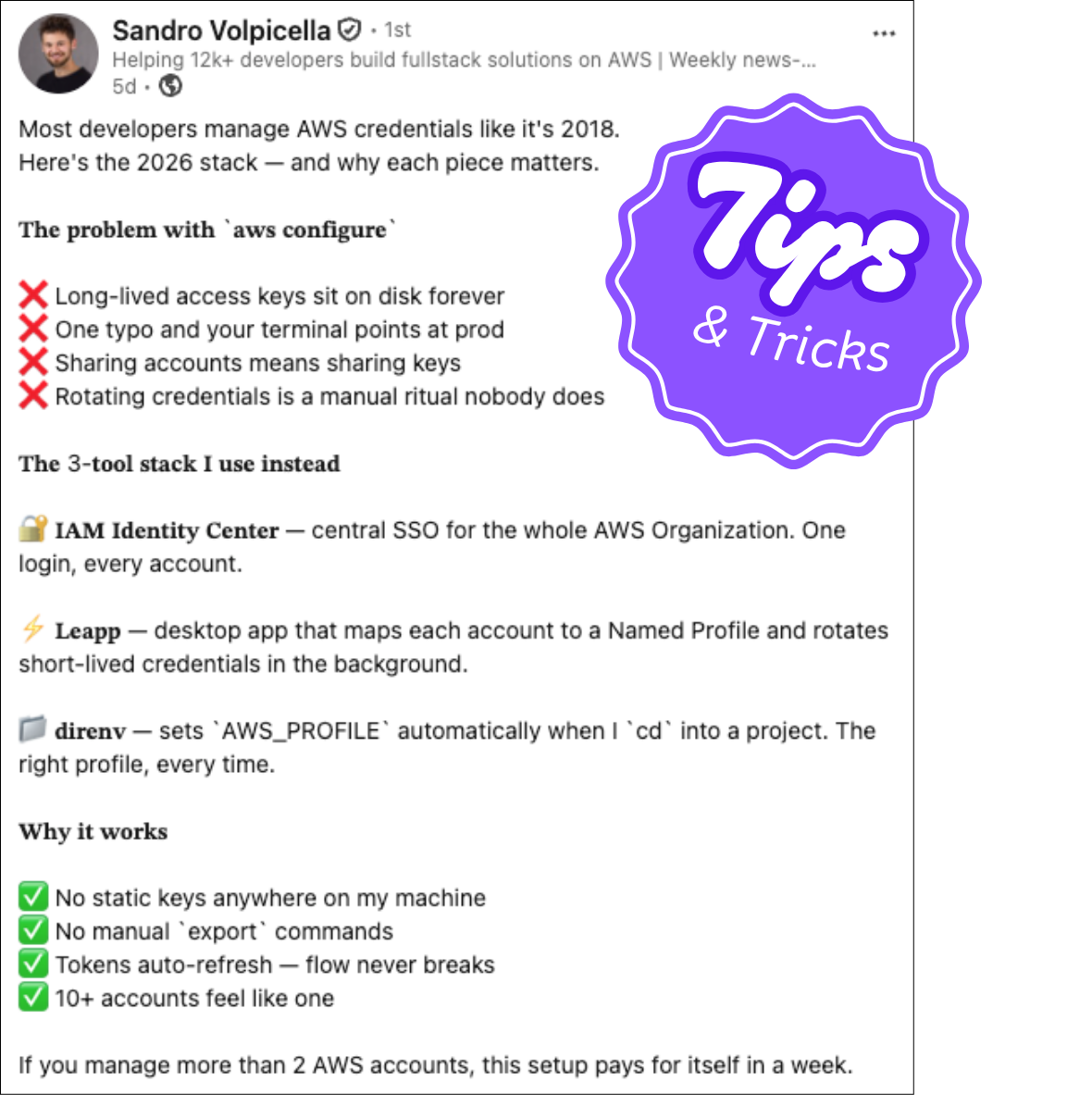
What’s your approach to managing AWS credentials locally? Leave a comment below.
🚀 New Releases
Here are the latest and most interesting releases over the past two weeks in the AWS World.
⭐ My favourite release is one that we have wanted for years now… multi-region Cognito!
AWS Secrets Manager introduces safe secrets handling in the Agent Toolkit for AWS.
Oracle Database@AWS now supports Oracle Autonomous AI Database Serverless.
Amazon Quick announces autonomous agents, multi-dataset analytics, and redesigned activity feed.
Amazon Quick expands integrations with new connectors for Adobe, Figma, WhatsApp, and more.
AWS Security Agent adds Kiro Power, Claude Code, simulated validations and new integrations support.
Amazon Bedrock Managed Knowledge Base is now generally available.
Announcing Web Search on Amazon Bedrock AgentCore for Agentic Web Retrieval.
Amazon S3 adds annotations to provide AI agents and analytics tools with context for data discovery.
Amazon Aurora DSQL now supports the JSONB data type with compression.
🔥 Tip: Check out https://aws-news.com/ for the very latest up-to-date serverless releases as they happen, created by the talented AWS Serverless Hero Luc van Donkersgoed.
✖️ Social of the Week
This week’s social isn’t a single post but a story that I think matters a great deal: Anthropic’s statement on the US government directive to suspend access to Fable 5 and Mythos 5.
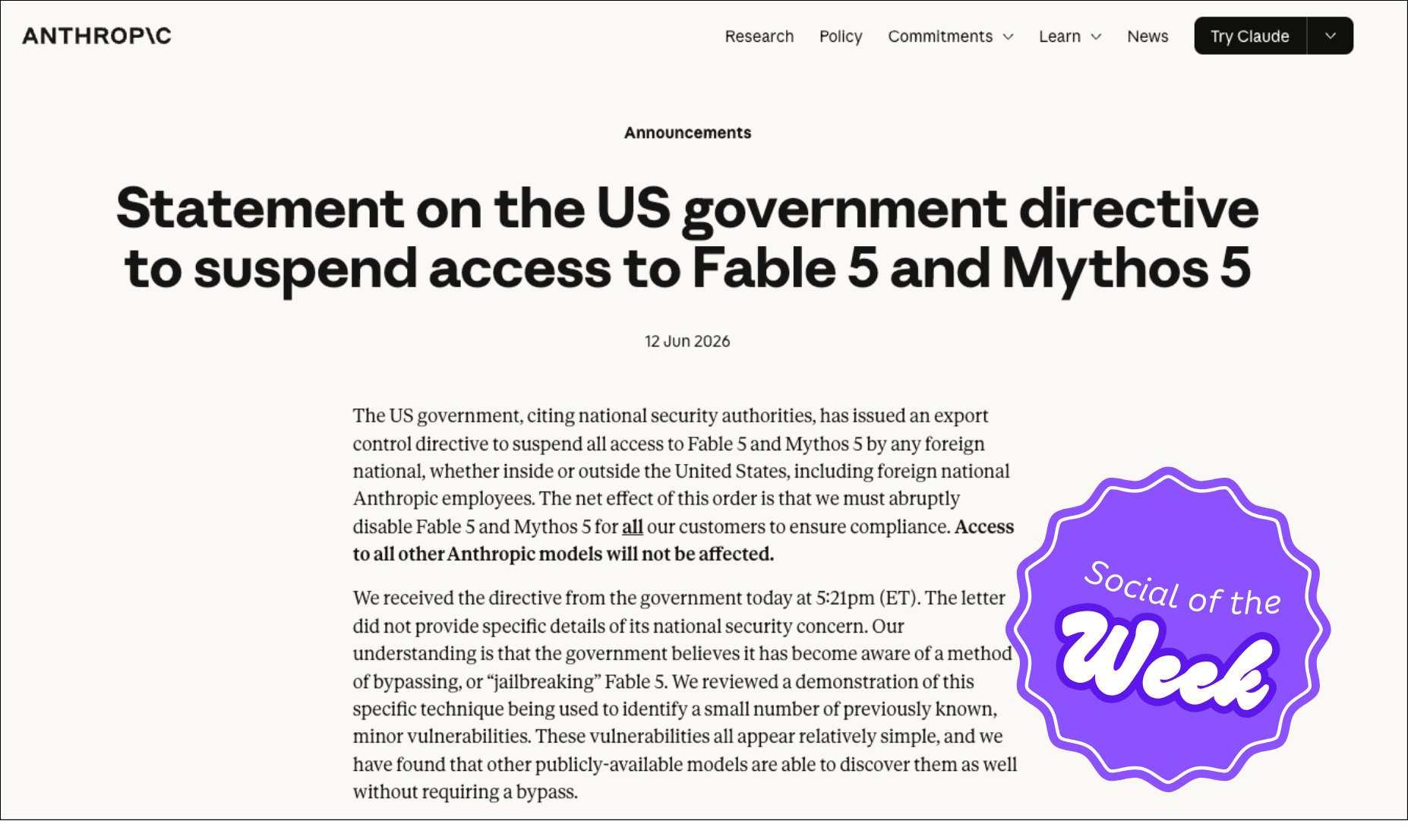
In short, the US government issued an export control directive citing national security, and Anthropic had to abruptly disable Fable 5 and Mythos 5 for all customers to comply. The understanding is that the concern relates to a method of “jailbreaking” the model around cybersecurity tasks. Anthropic disagrees that a narrow, non-universal jailbreak should be cause for recalling a commercial model deployed to hundreds of millions of people, but is complying while it works to restore access.
Notably, this has obviously been pulled from Amazon Bedrock, too (just before I got a chance to play with it!)
This one hit home for me. We actually spoke about exactly this at our weekly Software Architecture group this week, where only two days before, I was raising my concerns around application security with these models becoming so powerful. There is going to be a real fight ahead: using these tools to patch and harden our systems as quickly as possible, versus hackers trying to use the very same tools to attack them. The capability cuts both ways, and the gap between attacker and defender is going to be decided by who moves faster.
What are your thoughts on this? Leave a comment
👷🏻 Tools & Frameworks
Check out the latest open-source frameworks, news, and tool updates from the past two weeks.
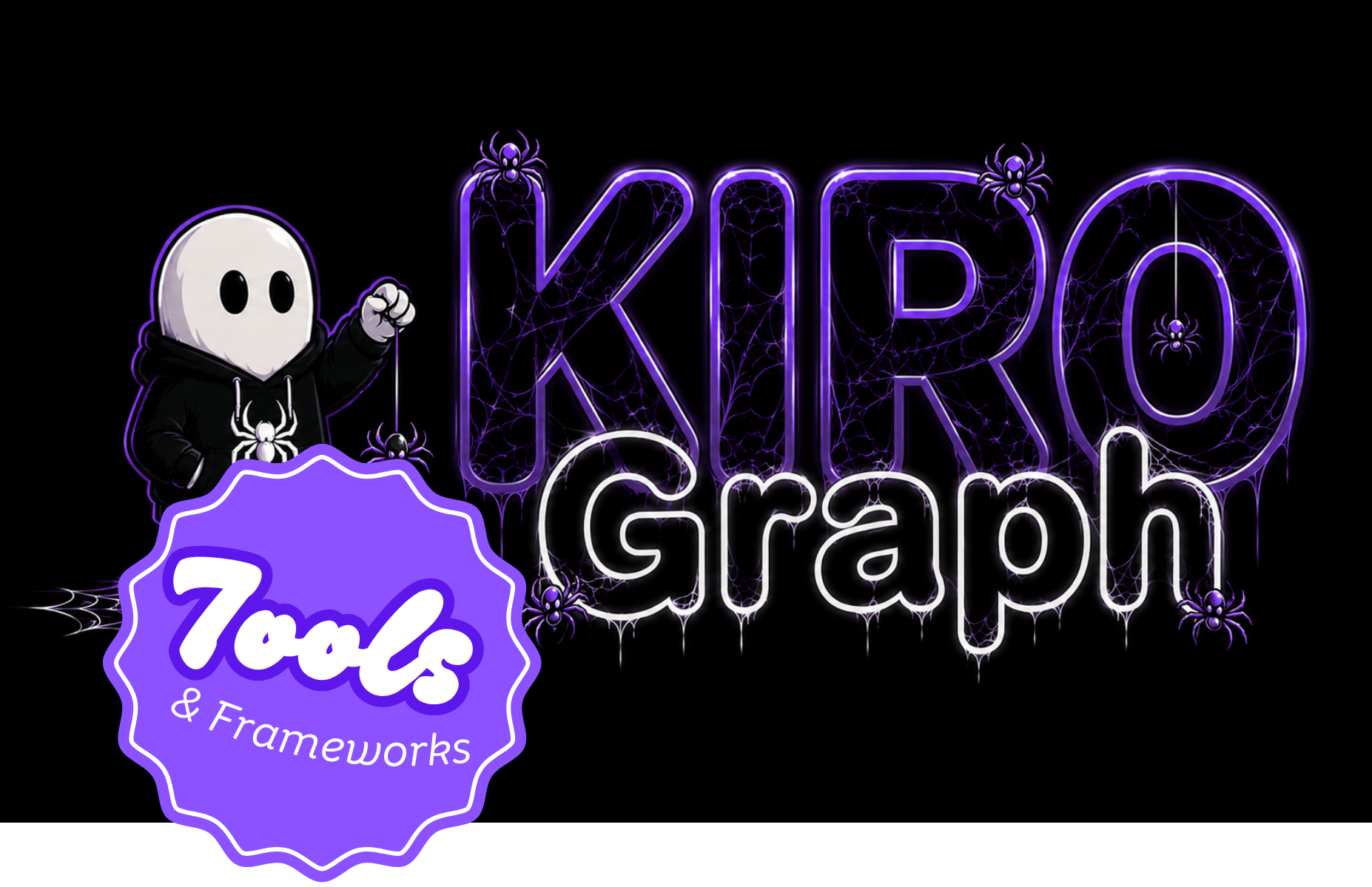
⭐ My highlight this week is KiroGraph by Davide De Sio, a semantic code knowledge graph for Kiro that gives the agent a pre-indexed graph of your codebase (symbols, call graphs, type hierarchies, impact radius) in a single MCP call.
FAST (Fullstack Solution Template for AgentCore) by awslabs is a starter template for deploying a secured, web-accessible React frontend connected to an AgentCore backend, handling the undifferentiated heavy lifting so you can build full-stack agentic apps in days rather than weeks.
AWS Lambda Durable Execution SDK for .NET is now available in preview. It lets you build resilient, long-running Lambda functions (up to a year) that checkpoint progress and resume after failures, expressing multi-step workflows as ordinary C# with await-able steps, waits, and callbacks.
AWS Prescriptive Guidance: MCP strategies is a handy PDF guide laying out strategies for adopting the Model Context Protocol on AWS.
AWS Startups Advisor is a resource for startups looking for tailored guidance and support as they build and scale on AWS.
obsidian-second-brain by Eugeniu Ghelbur is a cross-CLI skill (Claude Code, Codex, Gemini, OpenCode) that turns your Obsidian vault into a living, AI-first “second brain” that rewrites and reconciles itself as you add sources.
AWS Lambda agent setup guide is the official documentation for setting up AI agents to work with AWS Lambda, worth bookmarking if you’re building in this space.
Strands Agent Shell - Give your agent a shell without giving it the keys to your machine.
😂 Just for Fun
This issue, our just-for-fun post is this one on LinkedIn by Eduardo Ordax, a bit of AI humour about Claude.

This resonates with me (check out the video!), because, all jokes aside, I’ll admit I sometimes get a bit lazy and ask the models to make the simplest of changes for me, like tweaking a line of text in the UI, something I could have done by hand in less time than it took to write the prompt! There’s something about having an agent on tap that makes you reach for it even when you really don’t need to.
What are your thoughts? Do you do the same? Leave a comment below.
🎙️ YouTube & Podcasts
Here are some of my favourite videos and podcasts over the past two weeks covering serverless, AI, architecture, and software engineering.
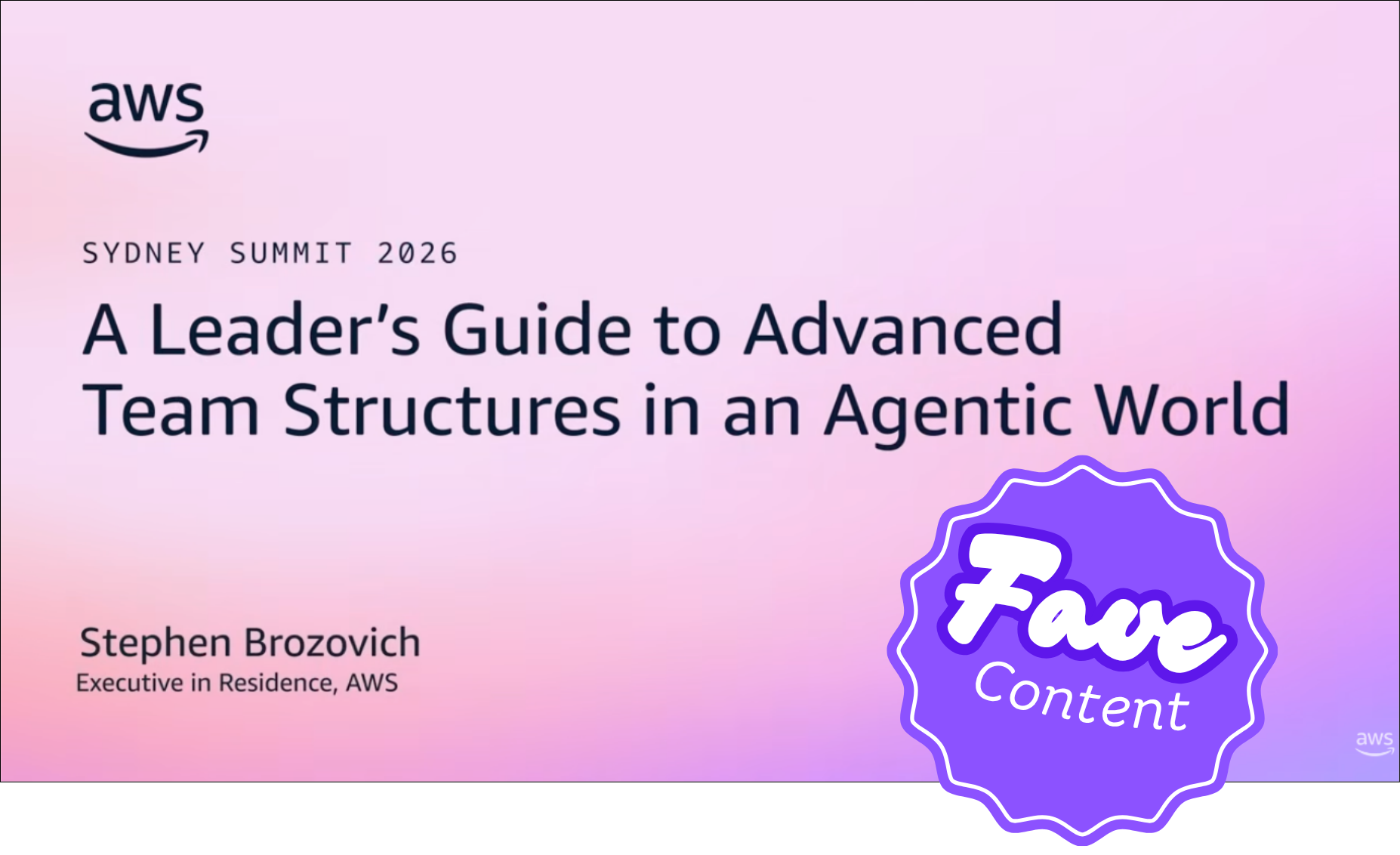
⭐ My favourite video this week is this one by Stephen Brozovich at AWS, which I wanted to highlight because it ties so closely to the presentations and articles I’ve been writing on team sizes, the use of the word “pods”, the orchestrator role, and the composition of modern teams. Here is the actual video below:
Luca Mezzalira & Teena Idnani cover ‘The Architect’s Guide to the AI Era‘.
The Data Engineering Central podcast with host Daniel Beach covers ‘From Failure to AWS: What Actually Makes a Great Engineer’ with guest Victor Moreno, on the shift from coding to systems thinking and why fundamentals matter more, not less, in the age of AI.
Lenny’s Podcast features Tony Fadell, Father of the iPod and iPhone, on building taste, judgment, and creativity in the AI era, a great watch on why human taste and judgment matter more than ever, and a warning against “cognitive surrender” to AI.
The Modern Software Engineering discusses ‘Automating Agentic AI Success Using This SECRET Workflow‘.
The AWS Developers channel covers ‘AI and the Job Market in 2026‘, and how you can get ahead. Some great tips in this one!
Johannes hosts Steve Fenton to discuss ‘Platform Engineering Research: Adoption Metrics, Optional Platforms & the “Three Asks”‘.
The Prime covers ‘I Think They Are Lying To You‘, the supposed next stage in AI development, “we don’t even prompt Claude anymore!“. This is a fun watch and super informative.
Weekly Case Study 🔍
This week’s case study looks at how Mondelēz International is transforming with AWS (read the full case study here):
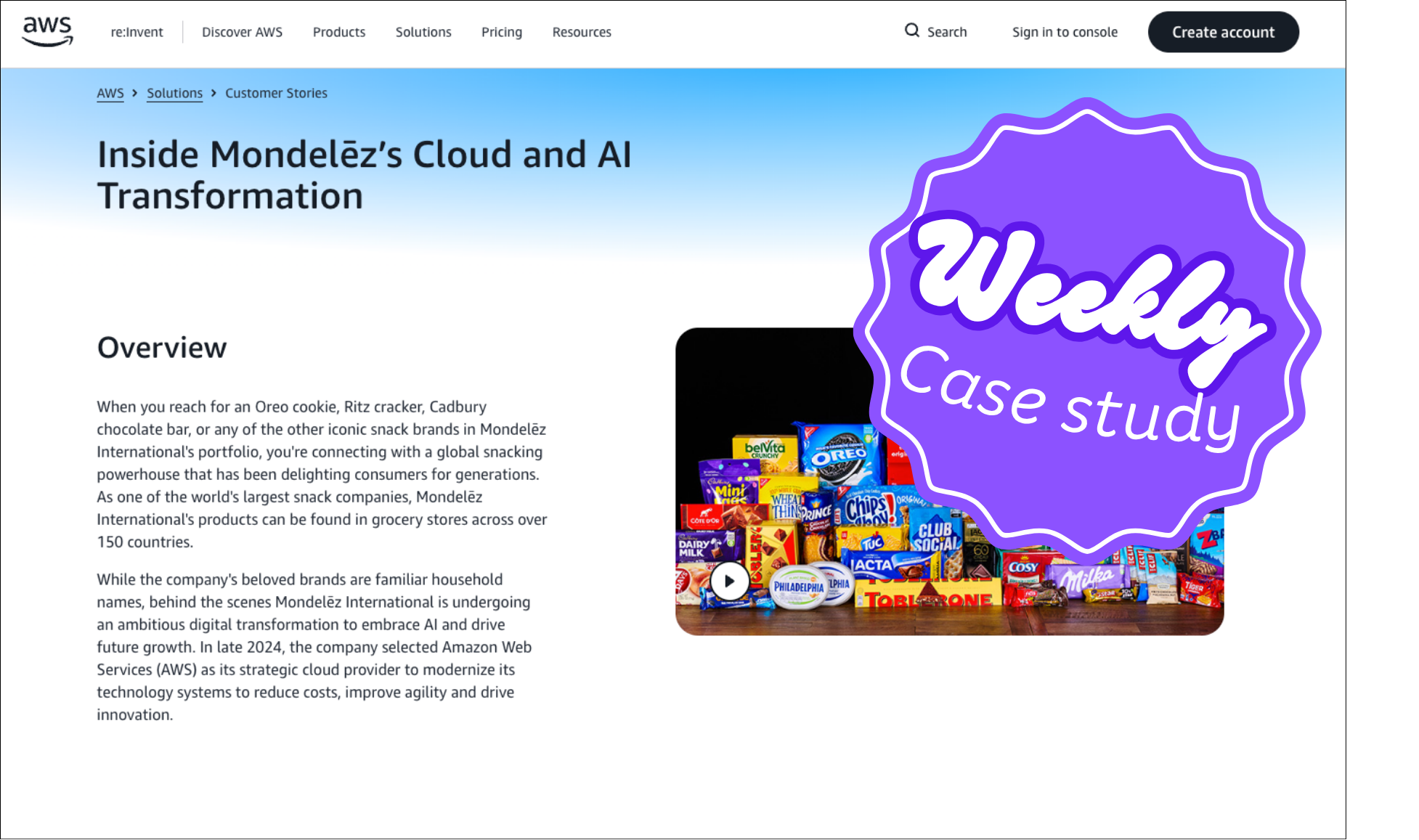
As one of the world’s largest snacking companies (Cadbury, Oreo, Toblerone and more), Mondelēz needed to modernise an ageing, complex technology estate to reduce costs, improve agility, and drive innovation across finance, marketing, sales, and communications.
In late 2024, Mondelēz selected AWS as its strategic cloud provider. Following a multi-cloud strategy, it has migrated hundreds of workloads and hundreds of terabytes of data to AWS, and is accelerating its move to the SAP RISE ERP platform on AWS for improved performance, reliability, resiliency, security, and AI-driven insights.
The migration has delivered rapid agility and productivity gains, modernised core business systems, and positioned Mondelēz to innovate faster with cloud and AI.
🗣️ Inspirational Quotes and Thoughts
This week’s inspirational thought covers Tesler’s Law, also known as The Law of Conservation of Complexity.

“For any system there is a certain amount of complexity which cannot be reduced.”
— Larry Tesler
Tesler’s Law tells us that every process has an inherent amount of complexity that cannot be removed, only moved. The question is never “how do we make the complexity disappear?” but “who should carry it, the user or the system?” The best products make the deliberate choice to absorb that complexity into the engineering so the user doesn’t have to.
I’ve had to think hard about this while building Study From Experts. Behind a simple “buy this course and start learning” experience sits a lot of complexity: payments, entitlements, secure video streaming, certificate generation on course completion, progress tracking, badges, and more.
The constant question I ask myself and the team is: “How do we make this process simple for our users?” Every time we take on a bit more complexity in the backend so the learner’s journey stays effortless, we’re paying down Tesler’s Law on their behalf, and in my opinion, that’s exactly where the complexity belongs.
What are your own thoughts? Leave a comment below.
🗳️ Poll of the Week
In the last poll, we asked the question, “Are you concerned with token use and costs in production when building AI and agents into your solutions?”.
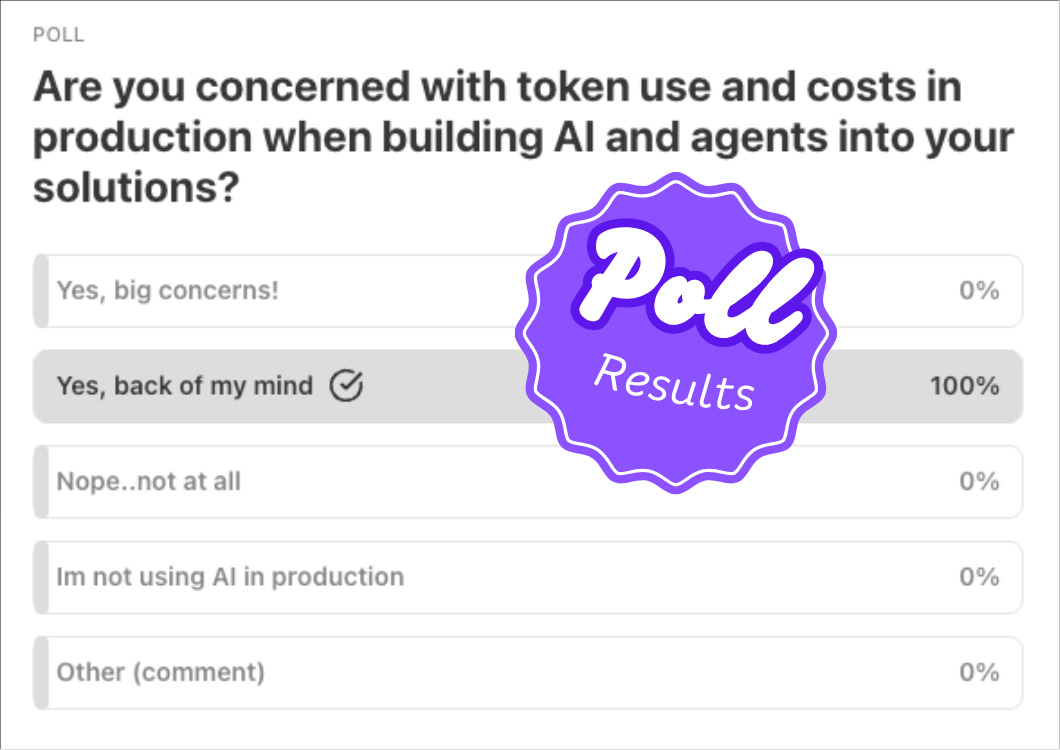
Im not shocked to see that 100% of people voted “Yes, in the back of my mind“. I personally recently had two agents in an A2A flow get into a strange state where it tried various permutations of the correct payload until it burned through 15m tokens in a 40 minutes. If I had not noticed through a CloudWatch dashboard, that could have continued for days, burning tokens at that rate!
I have to admit I was spooked, and it has made me look at other ways of tracking token use and having a kill switch for these processes.
In this issue, we ask the question: “Are you using AI for your code reviews?”
Please feel free to leave a comment below on your answer.
📅 Serverless Events
The following serverless events are upcoming, so mark your calendars.
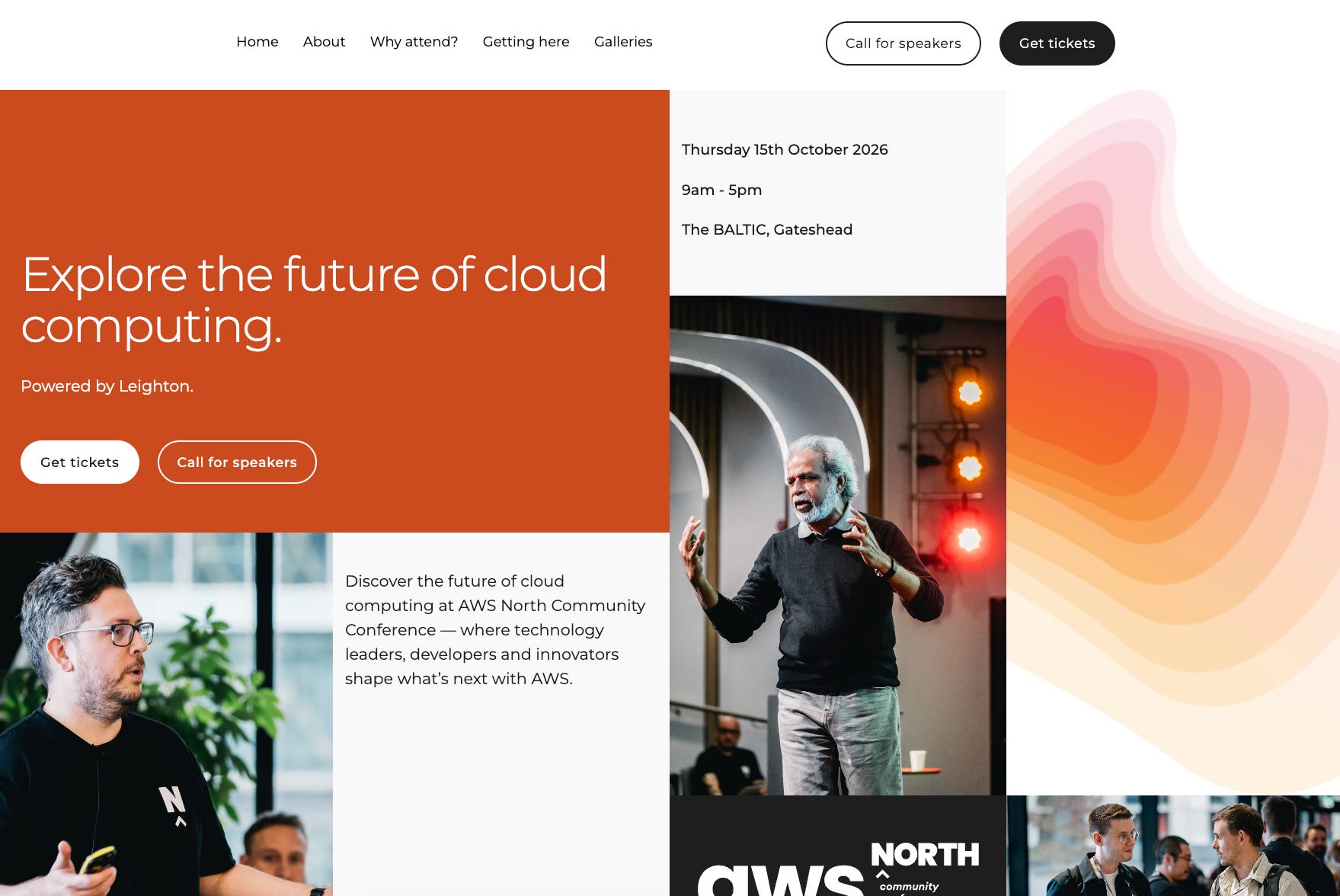
We are organising the AWS North Community Conference again this year, and CFP is currently open! Other amazing events:
ACD Midwest - 24th June 2026.
ACD Bengaluru - 11th July 2026.
ACD Poland - 8th Sept 2026.
ACD Adria - 22nd Oct 2026.
AWS North Community Conference - 15th Oct 2026.
Would you happen to have any upcoming events that you would like to highlight? Message me below!
⭐ Spotlight
This issue’s spotlight falls on AWS Principal Developer Advocate Sébastien Stormacq!

Sébastien is one of the most recognisable and generous voices in the AWS community. Through his talks, blog posts, videos, AWS podcast, and more, he has spent years making complex cloud, AI, and serverless topics approachable for builders everywhere, always with warmth, clarity, and a genuine enthusiasm for helping others learn.
Thank you for everything you do for the community, Sébastien!
Thank you for reading the latest Serverless Advocate Newsletter!
If you want to find out a little more about me, please have a look at:
https://www.serverlessadvocate.com/
See you next time,
Lee
