

#79 New Heroes Announced! 🦸🏽
This issue, our expert is AWS Principal Specialist Solutions Architect Sascha Möllering, and our spotlight is on AWS Developer Advocate Elizabeth Fuentes Leone.


Welcome
In the last issue, our serverless expert was AWS Senior Solutions Architect Lefteris Karageorgiou, and our spotlight fell on AWS Kiro Principal Tech Lead Brian Beach!
This issue, our serverless expert is AWS Principal Specialist Solutions Architect for AI Software Development Lifecycle Sascha Möllering, our spotlight is on AWS Developer Advocate Elizabeth Fuentes Leone, and we look at the latest AWS service releases, blog posts, hints and tips, news, and more!
This week’s newsletter is sponsored by Study From Experts, The Exclusive Home of AWS Deep-Dive Mastery. Gain access to a private library of advanced courses from the world’s most renowned AWS experts, with content so specialised, you won’t find it on any other platform.

🎉 New AWS Heroes Announced!
Congratulations to the newest AWS Heroes announced in May 2026! A huge welcome to:

Damiano Giorgi - Artificial Intelligence Hero Damiano Giorgi is a Cloud Solutions Architect focused on AI and its evolution, who transitioned from on-premises (on-prem) systems engineering to AWS and never looked back. He helps organise AWS User Group Pavia and AWS User Group Milan, and shares content on his personal blog, “Bass and Bytes.” Damiano developed the “Unofficial post:Invent Session Suggester,” powered by Amazon Bedrock and Amazon Nova, to help builders find AWS re:Invent sessions matching their interests.
Darryl Ruggles - Serverless Hero Darryl Ruggles is a Cloud Solutions Architect who spent many years as a software developer before focusing on AWS application and AI/ML architectures. He shares knowledge across serverless, containers, AI/ML, and FinOps through his blog, LinkedIn, and published projects. Darryl is an active member of many online AWS communities including “Believe In Serverless” and loves interacting with the community at events both online and in person. He is also a friend of the newsletter and a great guy!
Ricardo Daniel Ceci - Artificial Intelligence Hero Ricardo Daniel Ceci leads the AWS User Group Buenos Aires, which is the largest AWS community in Argentina with nearly 2,400 members. He is also the principal organiser of the AWS Community Day Argentina and was recognised as the AWS Community Leader of the Year 2025 for LATAM.
Matias Kreder - Artificial Intelligence Hero Matias Kreder is an AWS Certification Subject Matter Expert (SME) who contributed to multiple AI/ML certifications, including the AWS Certified AI Practitioner exam. His journey began with AWS DeepRacer, where he qualified three times as a finalist, which sparked his community work organising racing events and ML talks across the region.
📰 Articles that caught the eye
Here are some stand-out articles I read during the past two weeks in the World of Serverless, AI, engineering and architecture!
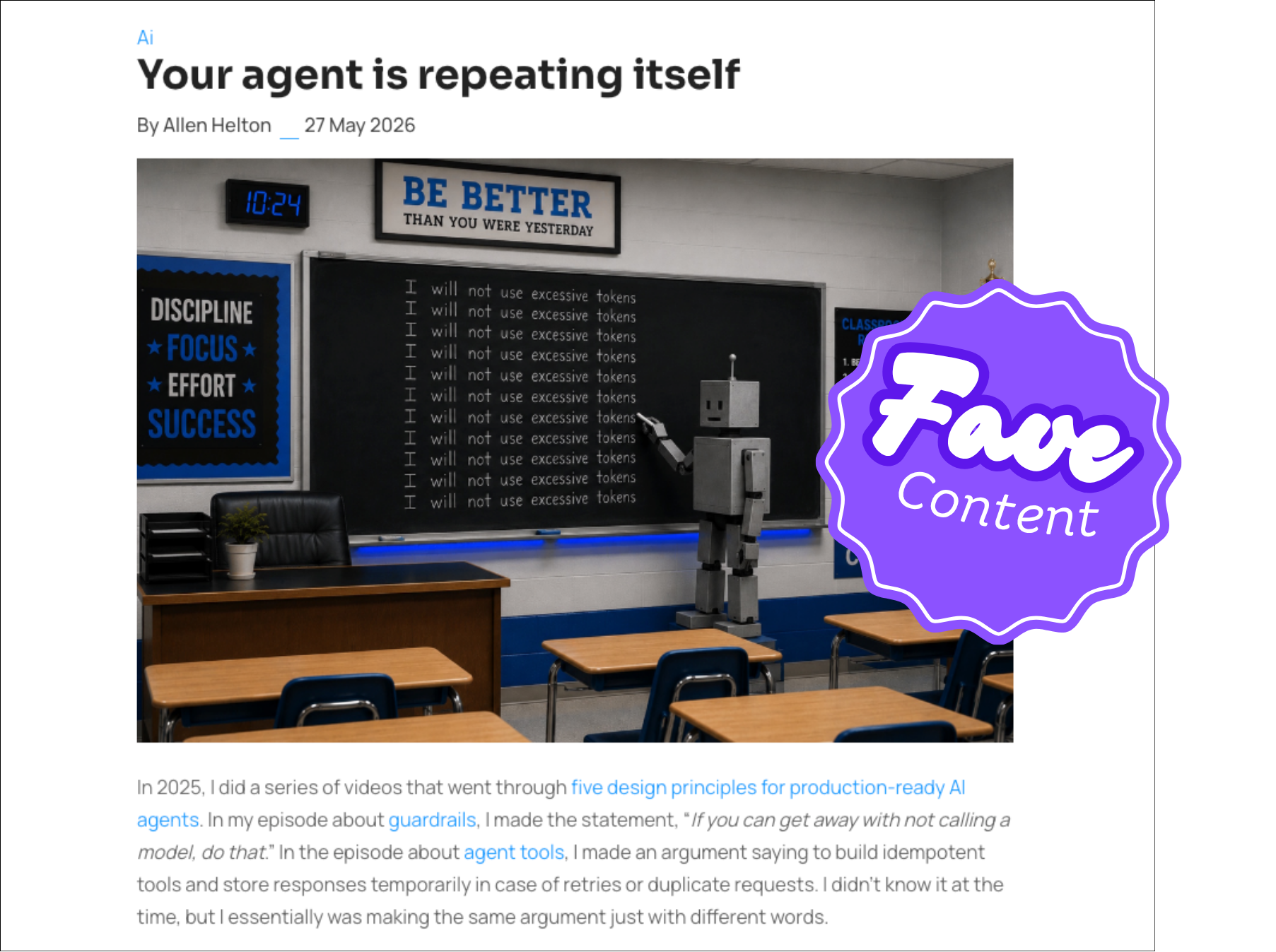
⭐ My favourite article over the past two weeks is by Allen Helton, who has a great article titled ‘Your agent is repeating itself’ where he discusses caching in agentic development. A must-read if you’re running agents at scale, and I got a lot from this.
Ankit Sharma on the Kiro blog covers ‘Specs just got faster (and smarter)’, announcing parallel task execution, quick plan mode, and requirements analysis powered by Neurosymbolic AI.
Ran Isenberg has a thought-provoking article titled ‘AI Changed How We Build. Our Tools Didn’t.’ where he argues that our IDEs, collaboration tools, sprint planning, and skills management haven’t kept pace with how we actually work now, from spec-driven development to markdown reviews and cross-repo context.
Ed Zitron has a characteristically fiery piece titled ‘Revenge of The Business Idiot’, a deep dive into the disconnect between executive enthusiasm for AI and the actual economics and outcomes.
Adam Polak from Effecytive Delivery covers ‘Don’t fear AI code reviews’, exploring how human-AI hybrid review processes can keep pace with the volume of code that AI agents now generate.
Vadym Kazulkin continues his excellent series with ‘Building AI Agents with Spring AI and Amazon Bedrock AgentCore – Part 5’, showing how to deploy an MCP client on AgentCore Runtime with CDK for Java infrastructure as code.
David Yanacek has a creative piece titled ‘DuneOps Part 2: Crossing bloodlines’, exploring how AI transforms Platform Engineering by enabling teams to push the ownership boundary further than ever before.
Darryl Ruggles has a great article titled ‘The Real Cost of Vector Storage: S3 Vectors vs OpenSearch vs pgvector vs Pinecone‘ comparing your various options and the costs associated.
Gunnar Grosch has an interesting article covering SMS delivery receipts on AWS Lambda, worth checking out if you’re working with messaging infrastructure.
And finally, a piece on Medium by the awesome Sheen Brisals titled ‘Who Made Aaron Redundant?’, a thought-provoking read on the human side of AI-driven workforce changes.
🎓 Ask the Expert
Each issue, I ask a different AWS expert the same three questions to get their personal insights. This issue, we have AWS Principal Specialist Solutions Architect for AI Software Development Lifecycle Sascha Möllering:

Opinions are the author’s and do not express the views of their employer.
1. What is one common mistake you see teams making when building their solutions, and how can they avoid it?
One common mistake is treating serverless purely as a cost optimisation exercise instead of an architectural decision.
I still see teams moving existing applications to Lambda without rethinking startup behaviour, state handling, retry semantics, or downstream dependencies. Technically, it works, but operationally, they often end up with unpredictable latency, difficult debugging, and scaling problems somewhere else in the system.
The teams that are successful with serverless usually think carefully about workload characteristics first: request patterns, startup costs, concurrency behaviour, observability, and how much coupling exists between services. Serverless works extremely well when the architecture is designed around those constraints instead of fighting them.
2. Which tool, package, or AWS service are you most excited about right now, and why?
Two things I find particularly interesting right now are Lambda SnapStart and AWS Lambda Power Tuning.
SnapStart changed the conversation around Java on Lambda quite a bit. A few years ago, most discussions were still centred around “Java cold starts are too slow for serverless.” Today, restore-based approaches are making startup behaviour much more predictable and operationally viable for Java workloads.
I also really like AWS Lambda Power Tuning because it helps teams stop guessing. A lot of serverless optimisation discussions are still based on assumptions instead of measurements. Power Tuning gives you a much clearer picture of the latency/cost tradeoff across different memory configurations, and the results are often surprising.
3. What is your favourite trick or tip that the readers may find interesting?
One thing I’ve found very useful is separating the invocation layer from the actual business logic.
If you keep the Lambda-specific parts thin and isolate the core application logic properly, it becomes much easier to run the same application efficiently in different environments (for example, both on Lambda and in containers) without major rewrites.
That flexibility becomes very valuable over time because scaling characteristics, traffic patterns, latency requirements, or cost models often change. Teams that keep those boundaries clean usually have a much easier time evolving their platform architecture later on.
Also check out Sascha’s fantastic course on the Study From Experts platform: “Architecting Java Systems in the Cloud“ by Sascha Möllering

Overview:
This course explores how to design and understand modern Java systems in cloud environments. Using the AcmeCorp Platform as a realistic microservices reference architecture, we examine architectural decisions around service boundaries, data access, and containerised deployments. You will instrument applications with Prometheus metrics and analyse system behavior through Grafana dashboards to identify issues such as inefficient queries and startup bottlenecks. We also explore the evolution of the JVM from Java 11 to 21+ and evaluate techniques like AppCDS, CRaC, and native images. Throughout the course, you will learn how to create reproducible benchmarks and reason about the interaction between architecture, observability, and the JVM.
🧠 Tips & Tricks
This issue, our tip or trick comes from Omar Ahmed, who has built a very cool piece of open-source tooling called Bedrock-lens, which tells you your Bedrock costs in real-time on AWS without having to wait 24-48 hours for any surprises! I have an upcoming article on a scary issue I hit personally in this area - stay tuned!

What are your thoughts on tracking token use with Amazon Bedrock and AgentCore? Should this be more native? Leave a comment below.
🚀 New Releases
Here are the latest and most interesting releases over the past two weeks in the AWS World:
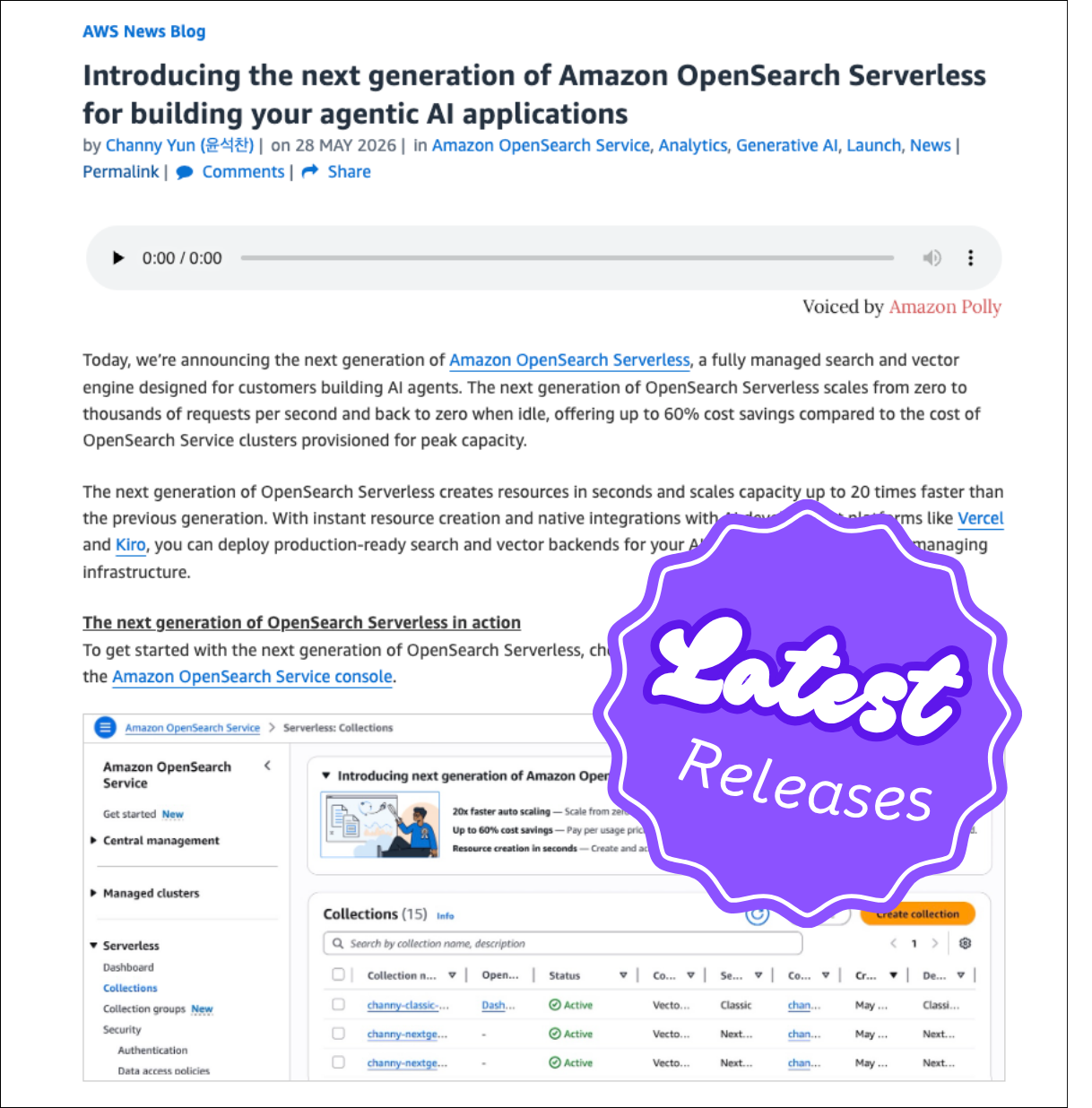
⭐ My favourite release over the past two weeks is the next generation of Amazon OpenSearch Serverless, a fully managed search and vector engine designed for customers building modern solutions and AI agents.
Amazon SES now offers inbox placement metrics and blocklist monitoring.
AWS Interconnect - multicloud now offers a free 500 Mbps tier.
Amazon Connect Customer expands generative AI-powered post-contact summaries to eight new languages.
DynamoDB Streams now supports AWS PrivateLink for FIPS endpoints in AWS GovCloud (US) Regions.
Amazon Aurora MySQL now supports integration with Kiro Powers.
Amazon Connect Customer now uses generative AI to automatically evaluate self-service interactions.
AWS Security Agent adds verification scripts for pentest findings.
Amazon CloudWatch Logs Insights adds new query commands and functions.
Amazon DocumentDB (with MongoDB compatibility) Serverless is now available on DocumentDB 8.0.
Amazon Bedrock expands support for request-level usage attribution.
AWS announces ExtendDB, an open source DynamoDB-compatible adapter.
🔥 Tip: Check out https://aws-news.com/ for the very latest up-to-date serverless releases as they happen, created by the talented AWS Serverless Hero Luc van Donkersgoed.
✖️ Social of the Week
This week’s social is by Matias Undurraga on LinkedIn:
“I am seeing a clear pattern across teams I work with: AI native teams are getting smaller.
…
But one trend feels hard to ignore: AI infused teams are trying to reduce coordination overhead. And one of the simplest ways to reduce coordination is to reduce the number of people who need to coordinate. Smaller teams. Faster loops. Less handoff. More ownership.“ - Matias

Matias shares his thoughts on product management and AI team size/design, which resonates strongly with the ideas I explored in my previous article, ‘The Architect-Developer: Orchestrating the AI-Driven Development Lifecycle (AI-DLC)’.

In that piece, I discuss how the developer’s role has shifted from author to orchestrator/architect, and we now work in smaller teams (pods). The keyboard is no longer the bottleneck. Clarity of thought and access to the right engineering and architecture experience are essential. My teams are made up of 2-3 people max, one being the orchestrator (typically a Principal Architect/Engineer, with a senior engineer, and a more junior cloud engineer).
Organisations no longer need armies of coders. They need orchestrators who can translate business intent into technical direction, guide AI agents, validate outputs, and ensure that what is built aligns with standards, strategy, and long-term maintainability.
What are your thoughts on this? Leave a comment
👷🏻 Tools & Frameworks
Check out the latest open-source frameworks, news, and tool updates from the past two weeks.
Martin Hicks announces Dynoxide 0.1.0 with browser and Docker support: a local DynamoDB emulator backed by SQLite with millisecond startup, a 3 MB download, no Docker and no JVM required. Now with browser support for client-side testing.
Ran Isenberg releases Propel - Kanban-style task management for macOS. Move fast, stay focused.
Bedrock Lens — A tool for visualising and understanding Amazon Bedrock model interactions. Worth checking out if you’re building with Bedrock (see above in the article).
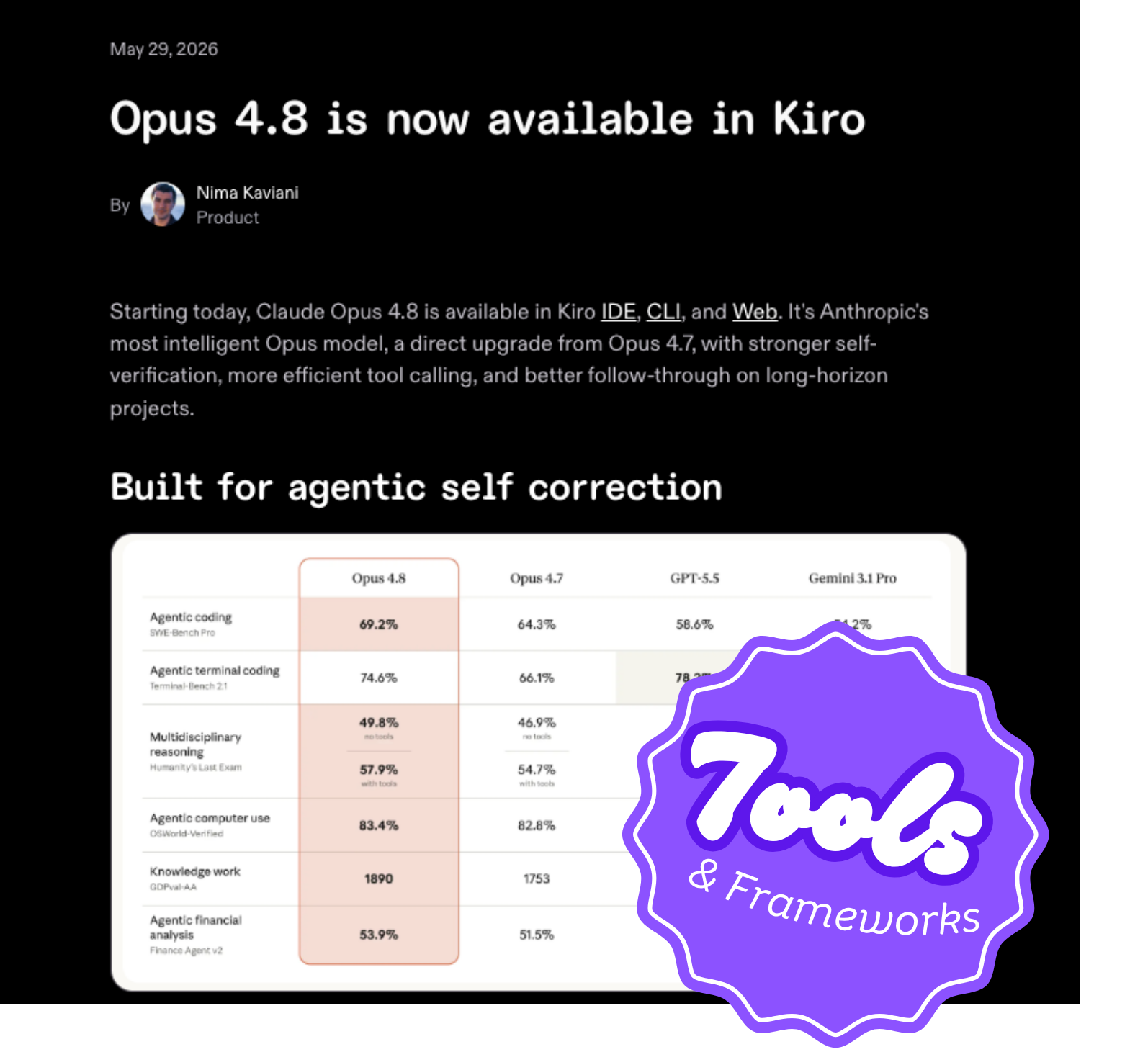
Kiro CLI — Claude Opus 4.8 Support — Kiro adds support for Claude Opus 4.8, bringing the latest model capabilities to the IDE and CLI.
Ampt — Faster Iteration with Reset and CLI Improvements — New CLI commands for resetting environments, managing params, and checking your identity, all without leaving the terminal.
Terraform Skill by Anton Babenko — A skill for AI coding agents that brings Terraform expertise directly into your agentic workflow. Great for teams using Terraform alongside AI-driven development.
😂 Just for Fun
This issue, our just-for-fun post is by Aku Nikkola on LinkedIn, showing off this new (fake) product!

This resonates with me personally, all jokes aside, because I do exactly this when I have the kids at their clubs and waiting around, when I’m travelling, or waiting around killing time. There’s something about those pockets of time that are perfect for getting into a flow with a side project and AI-assisted development! In the house, I am mainly on the Mac mini, else the MacBook and Kiro when I am out and about!
I do tend to use Kiro Web a lot now, meaning I don’t always need to do this, but I haven’t quite removed the IDE altogether yet!
It also reminds me of Sébastien Stormacq’s post this week about walking in an airport in the age of AI agents, where he’s literally walking through the terminal while his agents are working away in the background with the MacBook half open!

What are your thoughts? Leave a comment below.
🎙️ YouTube & Podcasts
Here are some of my favourite videos and podcasts over the past two weeks covering serverless, AI, architecture, and software engineering.

⭐ My favourite video this week is on the The Pragmatic Engineer channel, where they chat with the fantastic Dax Raad! Go watch this!
The AWS Developers Channel interviews Ryan Cormack, Principal Engineer at Motorway!
Martin Fowler & Kent Beck discuss “Agile Evolution & the Future of Software Engineering”
The Build. Automate. Ship Smarter in the Cloud channel again chats with Ryan Cormack, this time about Kiro Web! (Ryan is a busy guy right now!)
Lenny’s Podcast covers “A rational conversation on where AI is actually going“ with Benedict Evans. This is a great watch!
The GOTO channel has Kris Jenkins discussing “Building Context-Rich AI Tools with MCP“.
The ‘My 50 Cents’ channel covers “You don’t need the Architect title to do architecture”, chatting with Mahdi, tech leader at Fashion Cloud.
Weekly Case Study 🔍
This week’s case study is how ‘Vercel Transforms Developer Experience with Amazon Bedrock’:
Vercel shares how Amazon Bedrock powers their AI coding agents. The video highlights why Vercel selected Amazon Bedrock for its security, performance, and scalability capabilities while leveraging its existing AWS partnership. With Amazon Bedrock’s reliable infrastructure supporting 75 million code generations at the time of the video being created, Vercel continues empowering developers to create next-generation user experiences through their developer frameworks, AI agents, and front-end cloud platform.
🗣️ Inspirational Quotes and Thoughts
This week’s inspirational thought covers Miller’s Law: a psychological principle regarding cognitive load and working memory.

“The average person can only keep 7 (± 2) objects in working memory.”
— George A. Miller, 1956
Miller’s Law tells us that human working memory has hard limits. We can hold roughly seven items in our heads at once before things start falling through the cracks. This has profound implications for how we work with AI and agents today, in my opinion.
Whether you’re using autonomous agents running in the background, IDE-driven spec-driven development with human-in-the-loop, or both at the same time, the cognitive load is real and cumulative, in my opinion.
Personally, I currently have three projects running simultaneously, typically, each with its own specs, contexts, steering, MCP integrations, skills, agent outputs to review, and decisions to make. That’s many separate mental models, sets of trade-offs and contexts, and streams of AI-generated output that need human judgment applied.
The cognitive overhead of orchestrating multiple AI-driven workstreams is no less than writing code by hand; it’s different. You’re trading typing fatigue and thinking about your finer level coding approaches for decision fatigue and throughput (some may describe it as a fire hose). And decision fatigue is insidious because it doesn’t feel like “work” in the traditional sense, yet it drains you just the same.
What are your own thoughts? Leave a comment below.
🗳️ Poll of the Week
In the last poll, we asked the question, “Are you building AI agents in production?”
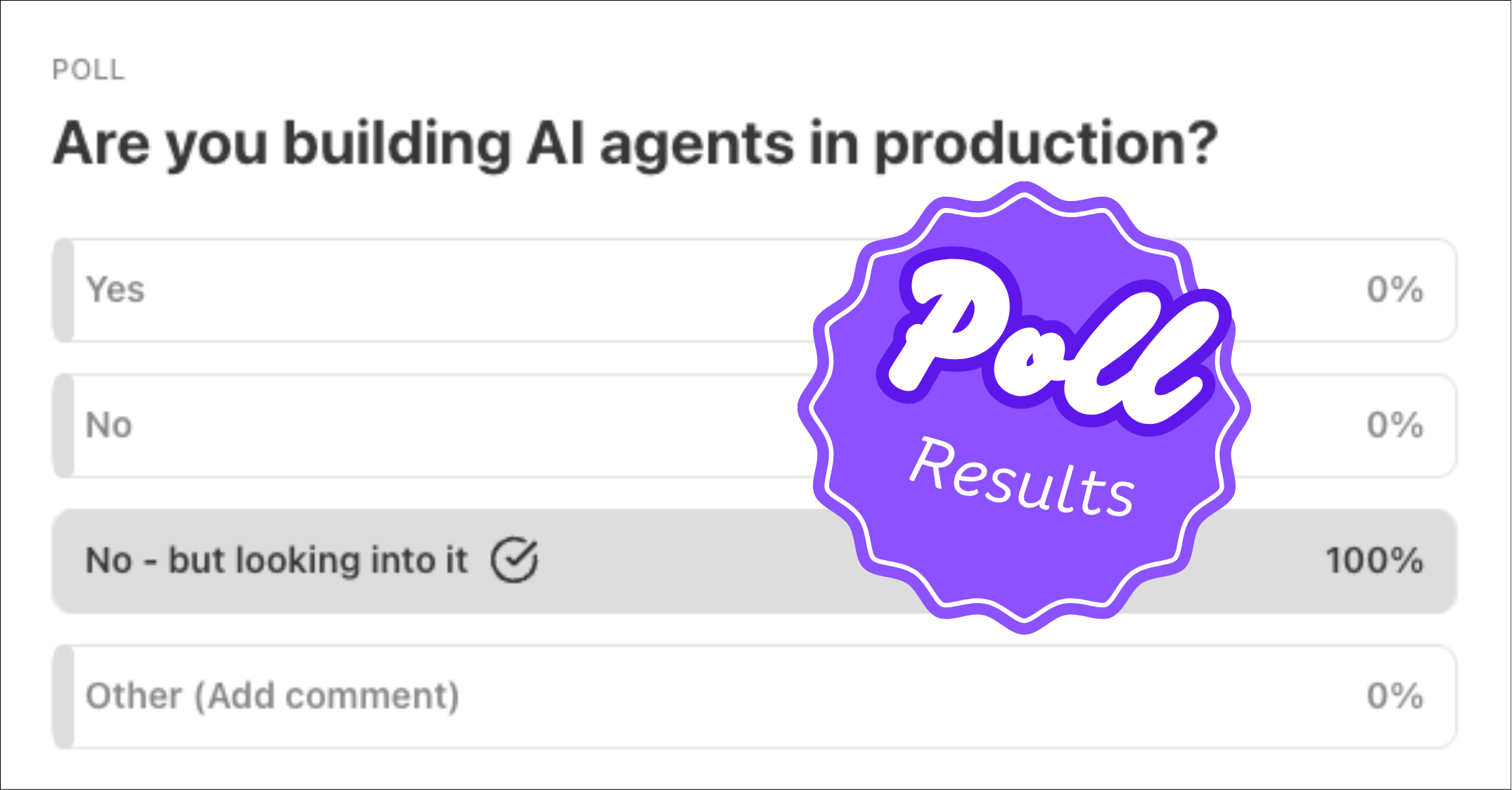
I was shocked to see 100% of people state no, but looking into it. I have been doing a lot with AgentCore recently, and the biggest issue for me is tracking token usage; it’s just not that clear and it's always a concern for me when tracking in the console.
In this issue, we ask the question: “Are you concerned with token use and costs in production when building AI and agents into your solutions?”
Please feel free to leave a comment below on your answer.
📅 Serverless Events
The following serverless events are upcoming, so mark your calendars.
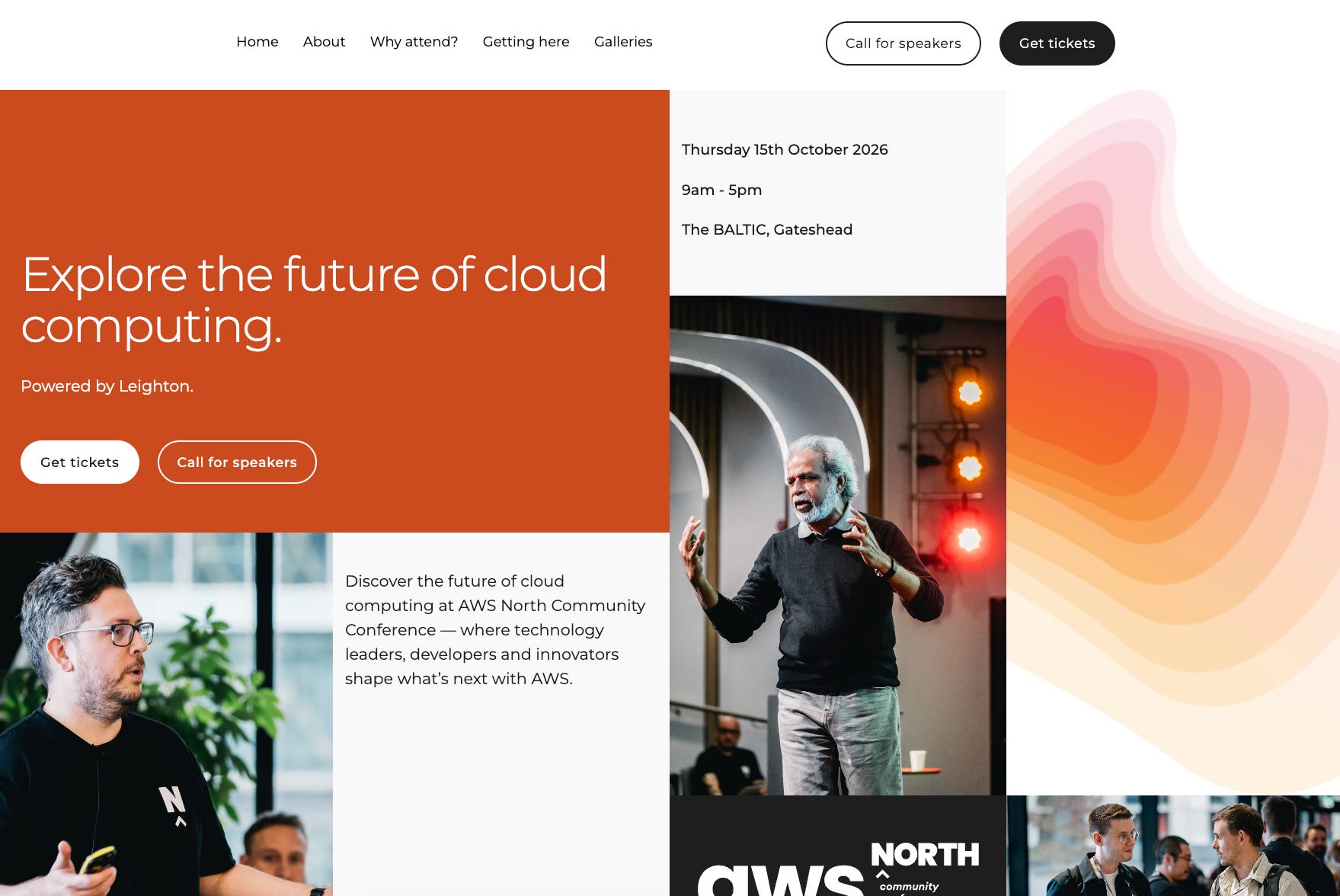
We are organising the AWS North Community Conference again this year, and CFP is currently open! Other amazing events:
AWS Comsum Birmingham - 4th June 2026.
ACD Midwest - 24th June 2026.
ACD Bengaluru - 11th July 2026.
ACD Poland - 8th Sept 2026.
ACD Adria - 22nd Oct 2026.
AWS Community Summit Birmingham - 4th June 2026.
AWS North Community Conference - 15th Oct 2026.
Would you happen to have any upcoming events that you would like to highlight? Message me below!
⭐ Spotlight
This issue’s spotlight falls on AWS Developer Advocate Elizabeth Fuentes Leone!

Elizabeth is a fantastic advocate for the AWS community, consistently sharing knowledge, creating content, open-source work, and helping developers understand complex AI and cloud concepts (she has reached more than 89,000+ developers through technical content). Her work bridges the gap between technical depth and accessibility for people starting their journey, making advanced topics approachable for developers at all levels.
I also want to highlight this excellent video from Elizabeth from this week: ‘Building with Amazon Bedrock’, a great example of the kind of high-quality, practical content she produces for the community.
Whether it’s through her talks, blog posts, videos, or community engagement, Elizabeth embodies what it means to be a developer advocate, meeting developers where they are and helping them level up.
Thank you for everything you do for the community, Elizabeth!
Thank you for reading the latest Serverless Advocate Newsletter!
If you want to find out a little more about me, please have a look at:
https://www.serverlessadvocate.com/
See you next time,
Lee
