

#78 Serverless Office Hours
This issue, our expert is AWS Senior Solutions Architect Lefteris Karageorgiou, our spotlight is on Principal Tech Lead Brian Beach, and we look at the latest AWS service releases, blogs, and more!


Welcome
In the last issue, our serverless expert was Adit Modi, and our spotlight fell on AWS Community Builder Viola Lykova!
This issue, our serverless expert is AWS Senior Solutions Architect Lefteris Karageorgiou, our spotlight is on AWS Kiro Principal Tech Lead Brian Beach, and we look at the latest AWS service releases, blog posts, hints and tips, news, and more!
This week’s newsletter is sponsored by Study From Experts, The Exclusive Home of AWS Deep-Dive Mastery. Gain access to a private library of advanced courses from the world’s most renowned AWS experts, with content so specialised, you won’t find it on any other platform.

📰 Articles that caught the eye
This week, I shared an article covering “Automated Certificate Generation with Event-Driven Serverless Pipelines on AWS”.
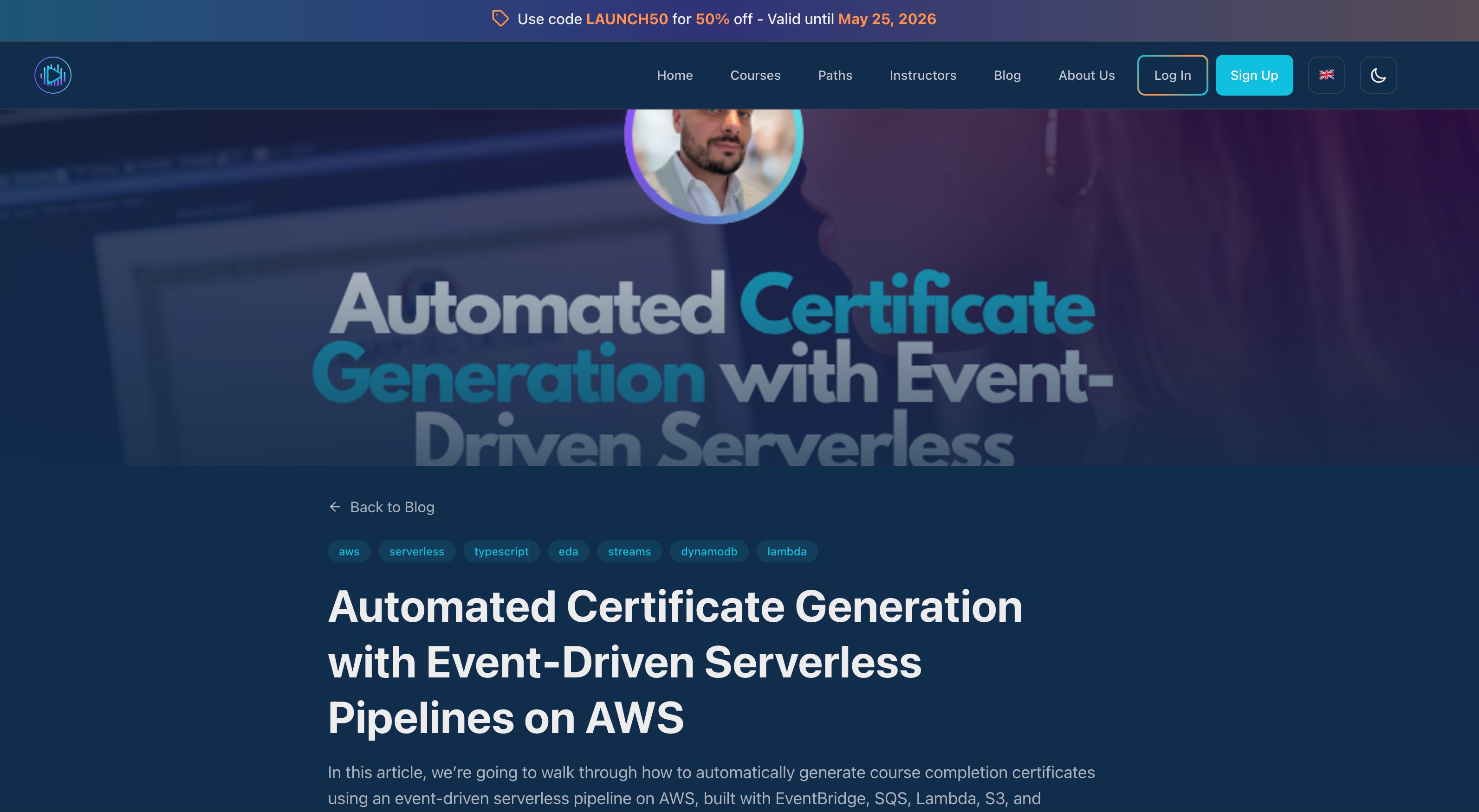
In this article, we walk through how to automatically generate course completion certificates using an event-driven serverless pipeline on AWS, built with EventBridge, SQS, Lambda, S3, and PDFKit.
Here are some other stand-out articles I read during the past two weeks in the World of Serverless, AI, engineering and architecture!
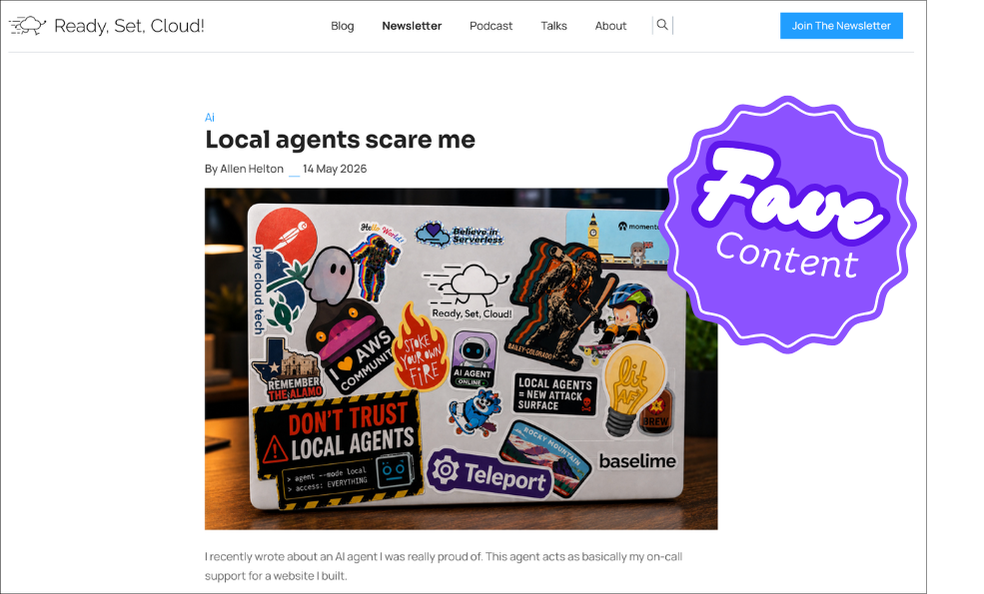
⭐ My favourite article over the past two weeks is by Allen Helton, who has a great article titled ‘Local agents scare me‘ where he discusses the security implications of running agents (great examples discussed in here too - so go check it out!).
Siddhant Khare has a deeply honest article titled ‘AI Fatigue Is Real and Nobody Talks About It’, exploring the paradox of AI-assisted productivity, why shipping more code than ever can leave you more drained than ever, and what to do about it.
Luca Cavallin covers ‘Platform Engineering End-to-End’, a comprehensive walkthrough of the full arc of platform engineering, from why it exists, to the pillars, to what success looks like.
Ran Isenberg has a great article titled ‘Is AWS Lambda Tenant Isolation Mode Enough for SaaS?’. This post explores the concept of tenant isolation, how Lambda’s tenant isolation mode works, where it helps, where it falls short, and how to decide whether it belongs in your SaaS architecture.
Monica Colangelo features ‘Per-tenant DynamoDB Isolation with the Token Vending Machine Pattern’, a detailed end-to-end implementation.
Michael Walmsley covers ‘Layered Configuration in Claude Code’, explaining how Claude Code’s settings system actually works.
Pahud Hsieh has a great article titled ‘AI Can’t Fix What It Can’t See: How cdk diagnose Enables Autonomous CDK Remediation’, showing how the new cdk diagnose CLI subcommand surfaces deployment failures with CDK-aware context.
Luciano Mammino covers ‘Writing Middlewares for Rust Lambda Functions’, a deep dive into the tower middleware pattern.
Andreas John covers ‘Enforcing Python Architecture Rules with PyTestArch’, showing how to express architectural rules, i.e., “this package must not import that one”, as regular pytest tests that fail the build when someone crosses a line you drew.
Last week, we had the pleasure of going live with a new course on the Study From Experts platform: “Architecting Java Systems in the Cloud“ by Sascha Möllering

Overview:
This course explores how to design and understand modern Java systems in cloud environments. Using the AcmeCorp Platform as a realistic microservices reference architecture, we examine architectural decisions around service boundaries, data access, and containerised deployments. You will instrument applications with Prometheus metrics and analyse system behavior through Grafana dashboards to identify issues such as inefficient queries and startup bottlenecks. We also explore the evolution of the JVM from Java 11 to 21+ and evaluate techniques like AppCDS, CRaC, and native images. Throughout the course, you will learn how to create reproducible benchmarks and reason about the interaction between architecture, observability, and the JVM.
🎓 Ask the Expert
Each issue, I ask a different AWS expert the same three questions to get their personal insights. This issue, we have AWS Senior Solution Architect Lefteris Karageorgiou:

Opinions are the author’s and do not express the views of their employer.
1. What is one common mistake you see teams making when building their solutions, and how can they avoid it?
A common mistake is that companies think serverless is all about AWS Lambda, and as a result, they become overly concerned about cold starts.
In reality, serverless is much broader than Lambda. Many use cases can be solved without Lambdas at all. For example, by using direct integrations with Amazon API Gateway or orchestrating workflows with AWS Step Functions.
The key is to step back and evaluate whether Lambda is actually needed. If it’s only being used to move data from one service to another, it’s often unnecessary.
That said, when you do need Lambda, you should know how to optimise it properly. Three of the most effective techniques are:
1. Optimise memory: Use the AWS Lambda Power Tuning tool to find the optimal memory configuration. Since memory allocation also scales CPU, the right balance can significantly reduce both execution time and cost.
2. Minimise deployment size: Smaller packages lead to faster cold starts, so remove unused dependencies and keep artefacts lean.
3. Use SnapStart: Especially for Java workloads, SnapStart can dramatically reduce cold start latency by initialising functions ahead of time.
By using Lambda intentionally and optimising it when needed, you can avoid unnecessary complexity and get the best out of serverless.
2. Which tool, package, or AWS service are you most excited about right now, and why?
Right now, I’m most excited about AWS Lambda durable functions. This is something the ecosystem has needed for a long time, bringing orchestration closer to the application layer. Previously, you could achieve similar outcomes with AWS Step Functions, but local development, testing, and debugging were often cumbersome.
Although this may seem similar to Step Functions, the trade-offs are important:
Use durable functions when:
- Your team prefers standard programming languages and familiar development tools
- Your application logic primarily lives inside Lambda functions
- You’re building Lambda-centric systems with tight coupling between workflow and business logic
Use Step Functions when:
- You need a visual workflow representation for cross-team visibility
- You’re orchestrating multiple AWS services and want native integrations without writing custom SDK code
- You want zero-maintenance infrastructure (no patching or runtime concerns)
Durable functions make it much easier to build complex, long-running workflows directly in code, opening the door to more advanced use cases like multi-step processes and agent-style orchestration, without sacrificing developer experience.
3. What is your favourite trick or tip that the readers may find interesting?
A common anti-pattern I see is treating AWS Lambda as “one service = one function.” This often leads to architectures with hundreds of tiny Lambda functions, which quickly become difficult to manage, deploy, and reason about.
Instead, treat your Lambdas as microservices within a bounded context. It’s perfectly fine, and often preferable, to group related functionality together. For example, within a “users” domain, you can have both 'createUser' and 'deleteUser' handled by the same Lambda.
When deciding how to group your functions, consider these factors:
- Bounded contexts
- Team organisation
- Scoped IAM permissions
- Common code dependencies
- Common downstream dependencies
- Initialisation time (cold start impact)
- Memory configuration
A powerful way to implement this approach is the Lambda Web Adapter pattern. Instead of creating one Lambda per HTTP endpoint, you run a traditional web framework inside a single Lambda and handle routing internally. This allows you to use familiar frameworks like Express.js, Flask, Django, Spring Boot, or ASP.NET.
The result is a more maintainable system that aligns with real domain boundaries, without losing the benefits of serverless.
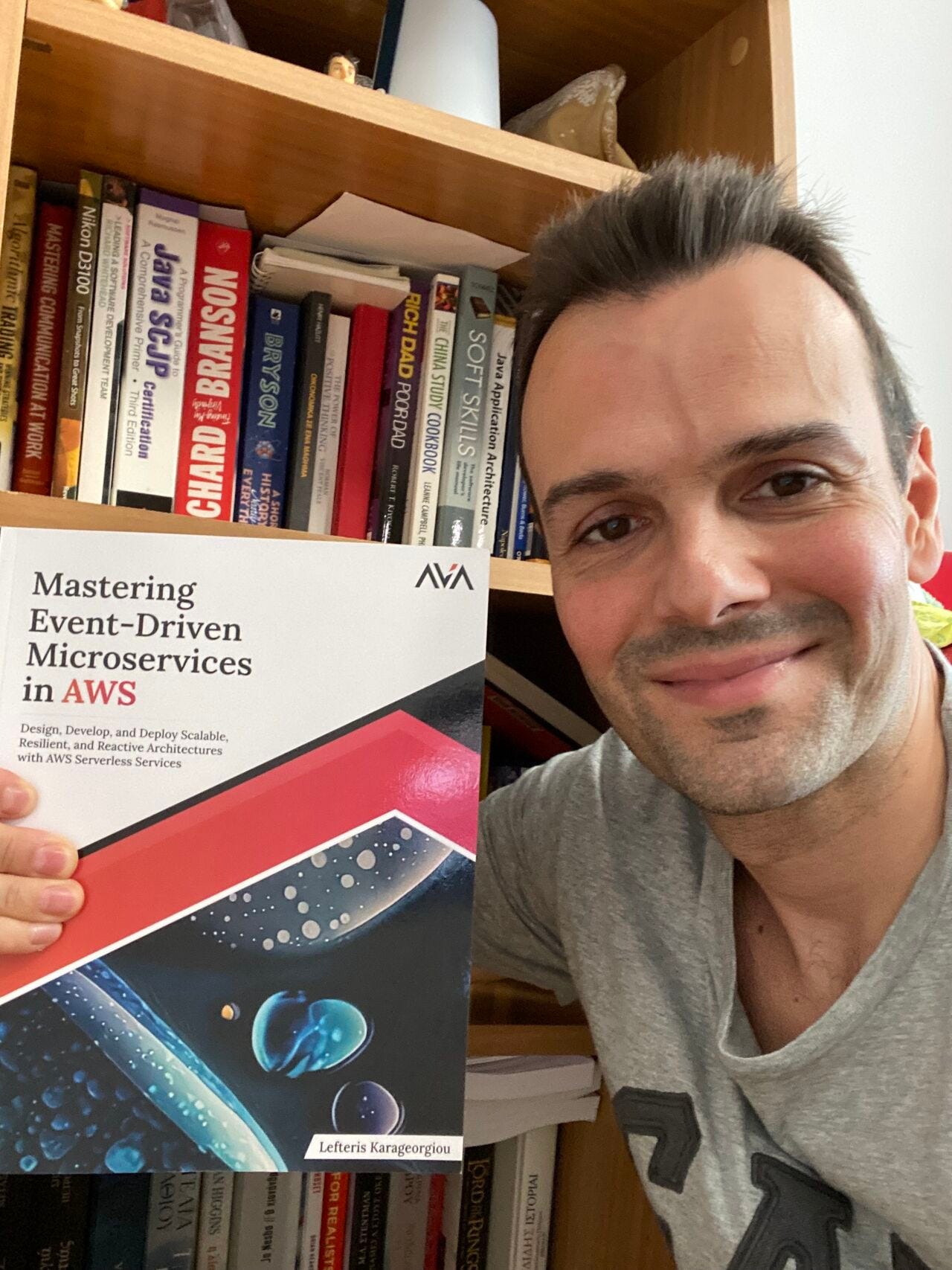
Also, go check out the following from Lefteris:
His blog: https://blog.thecloudengineers.com/
His latest book: https://a.co/d/0efajvXG
🧠 Tips & Tricks
This week’s tip is about the Get Hands-On With Serverless training workshops by AWS:
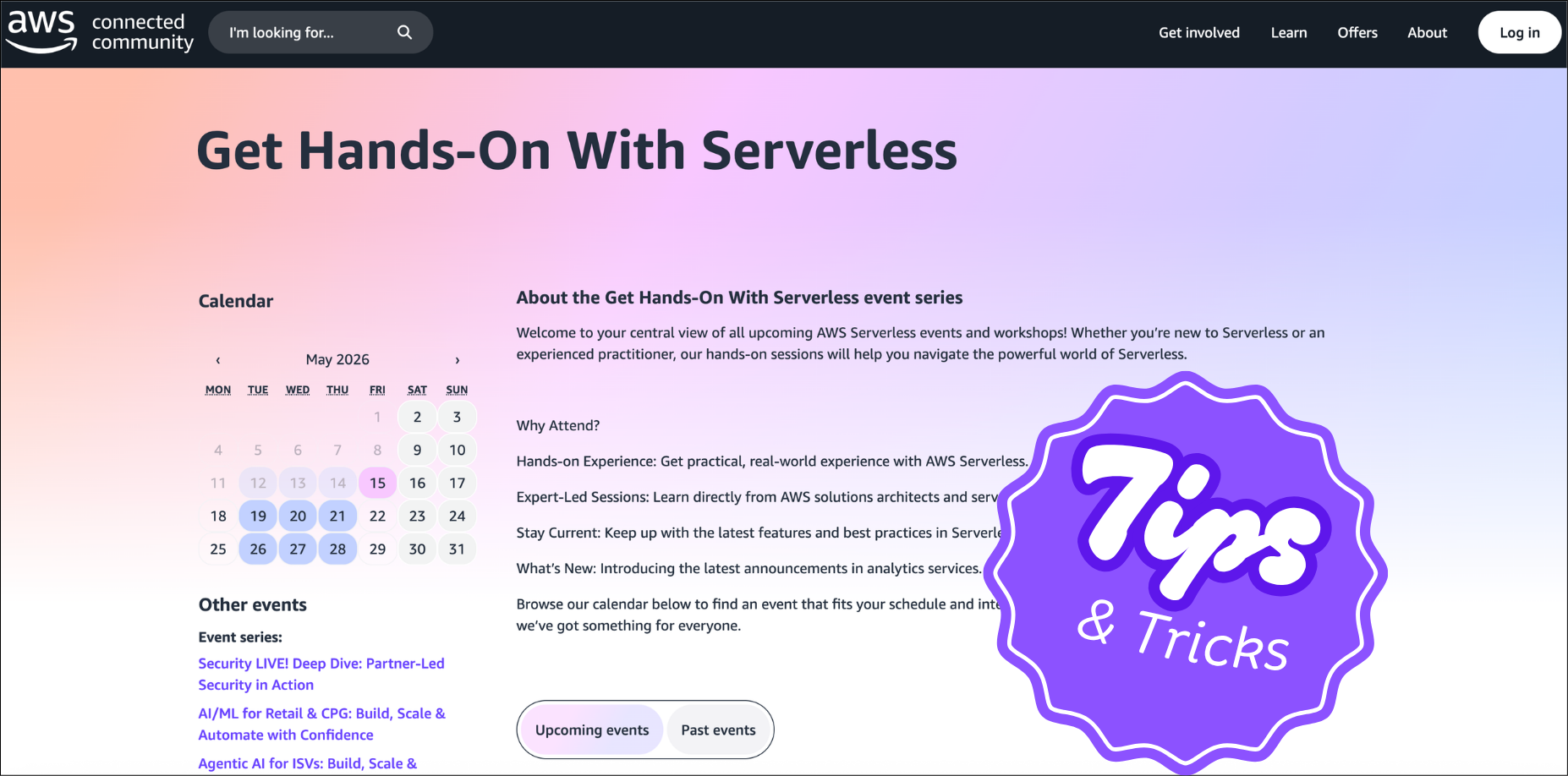
AWS is running a series of hands-on serverless workshops designed to help you build real-world applications using AWS Lambda, API Gateway, DynamoDB, and more.
These are instructor-led sessions where you get to build alongside AWS experts, a great opportunity to level up your serverless skills with guided, practical experience.
Check out the full schedule and register at aws-experience.com.
🚀 New Releases
Here are the latest and most interesting releases over the past two weeks in the AWS World:
⭐ My favourite releases over the past two weeks are DSQL CDC in preview, the Claude Platform being available on AWS, and the new direct service integrations with EventBridge scheduler.
Amazon CloudWatch Logs announces increased query result limits.
AWS Organisations now supports higher quotas for service control policies (SCPs).
Amazon CloudFront announces Passthrough Mode for mutual TLS (Viewer).
Amazon Bedrock Introduces Advanced Prompt Optimization and Migration Tool.
Amazon CloudFront announces support for OCSP Revocation for Mutual TLS (Viewer).
AWS Transform adds agentic AI assistant to the AWS Toolkit for Visual Studio.
AWS Transform agents now available in Kiro, Claude, Cursor, and Codex.
Amazon Aurora DSQL now supports change data capture (Preview).
Reference stack outputs across accounts and Regions with AWS CloudFormation and CDK.
AWS Lambda supports scheduled scaling for functions on Lambda Managed Instances.
Amazon EventBridge Scheduler adds 619 new SDK API actions, including Lambda Managed Instances.
Amazon Route 53 Domains adds support for 34 new Top Level Domains including .app, .dev, and .health.
Agents that transact: Amazon Bedrock AgentCore now includes Payments (preview).
Amazon Aurora DSQL now supports the JSON data type with compression.
🔥 Tip: Check out https://aws-news.com/ for the very latest up-to-date serverless releases as they happen, created by the talented AWS Serverless Hero Luc van Donkersgoed.
✖️ Social of the Week
This week’s social is by Jason Mikula on LinkedIn:
Coinbase fires 14% of staff, then announces they’re replacing them with AI agents, then has non-technical staff building features with AI. Then they have degraded services. This is the reality of what’s happening in the industry right now:
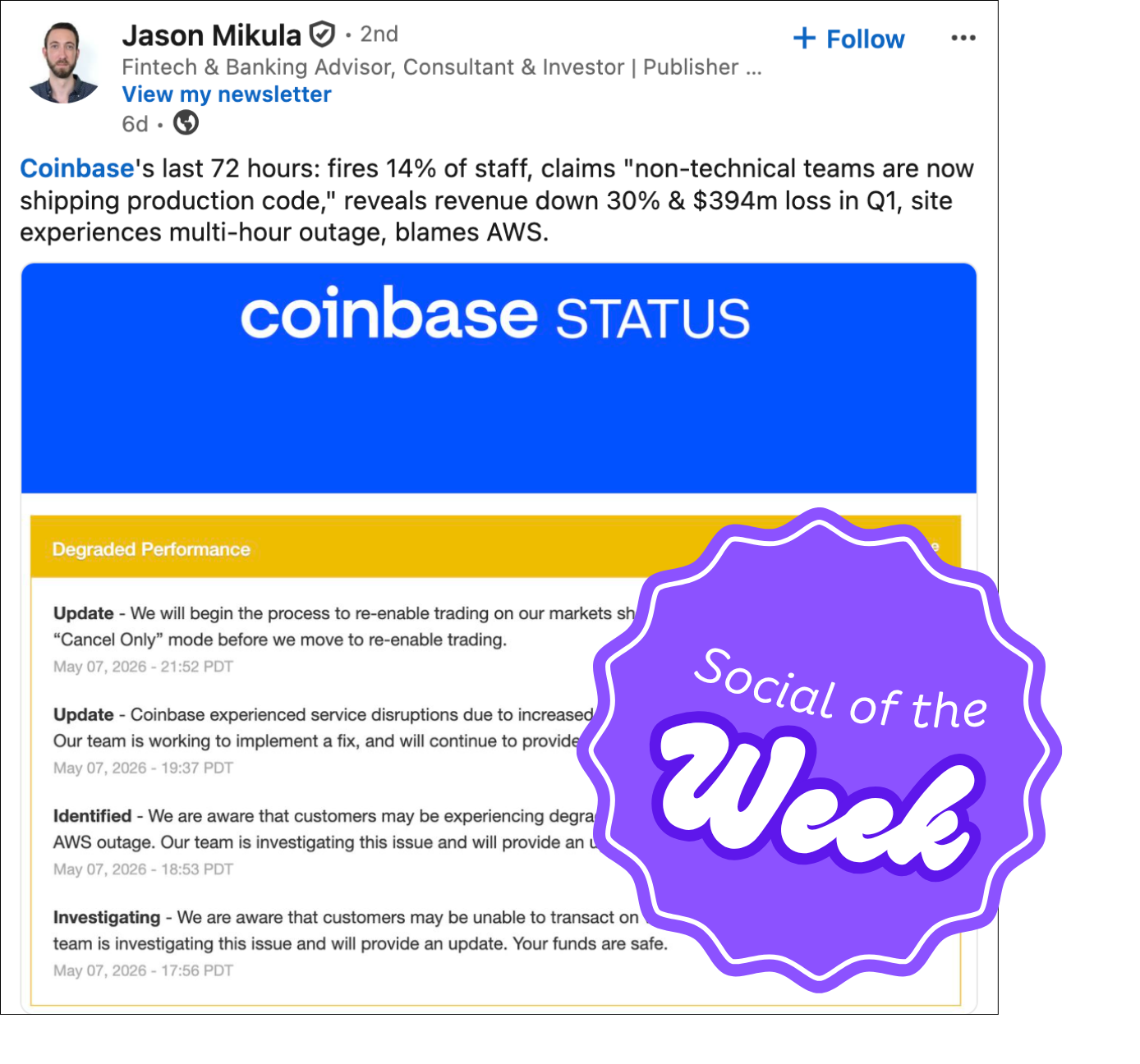
I personally feel that non-technical staff should not be using AI to produce code and features, as it’s everything that happens under the surface that is key:
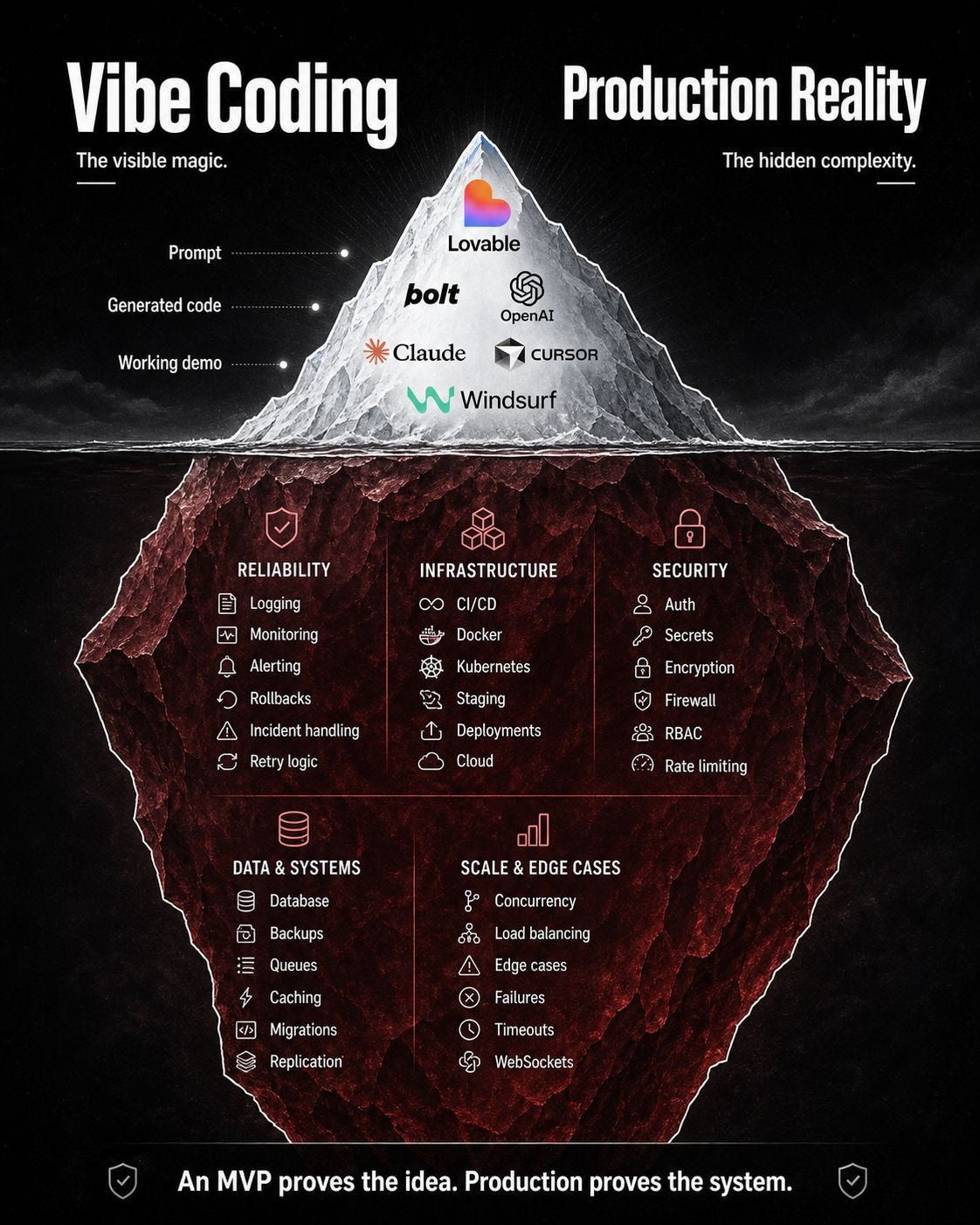
caching, resiliency, scalability, testing, observability, security, and more...
The surface-level code is the easy part. The hard part is everything you can’t see. And this is coming from a very experienced architect who has built systems for 25 years.
This post by Anupam Ghosal on LinkedIn (image below) actually demonstrates this perfectly, showing what happens when AI-generated code hits production without the engineering fundamentals underneath it.
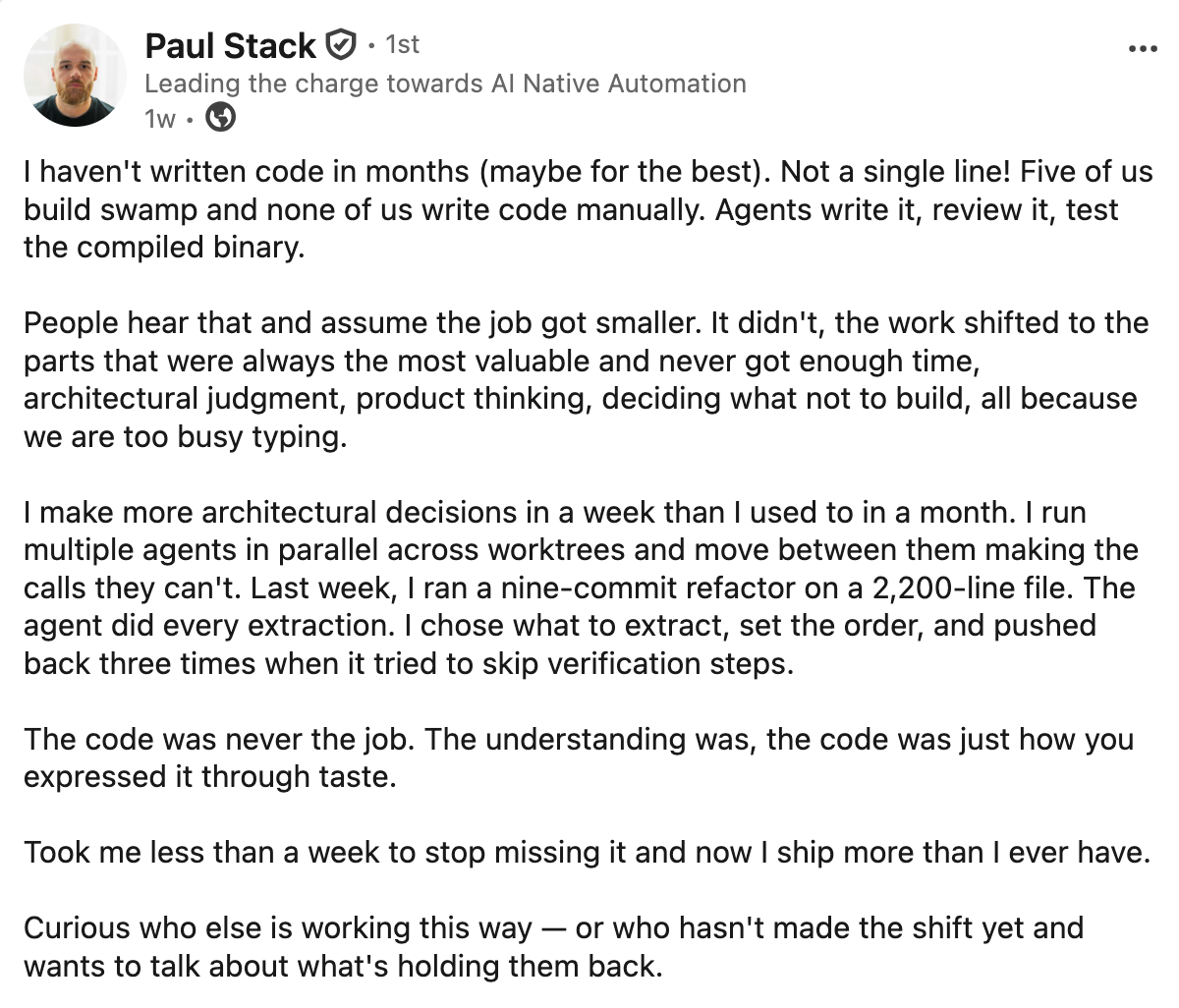
I also want to back this up with a great quote from a friend of the newsletter, Paul Stack on LinkedIn, who articulates this brilliantly. The code is the easy part. The architecture, the trade-offs, the operational excellence: that’s where the real engineering lives.
What are your thoughts on this? Leave a comment
👷🏻 Tools & Frameworks
Check out the latest open-source frameworks, news, and tool updates from the past two weeks.
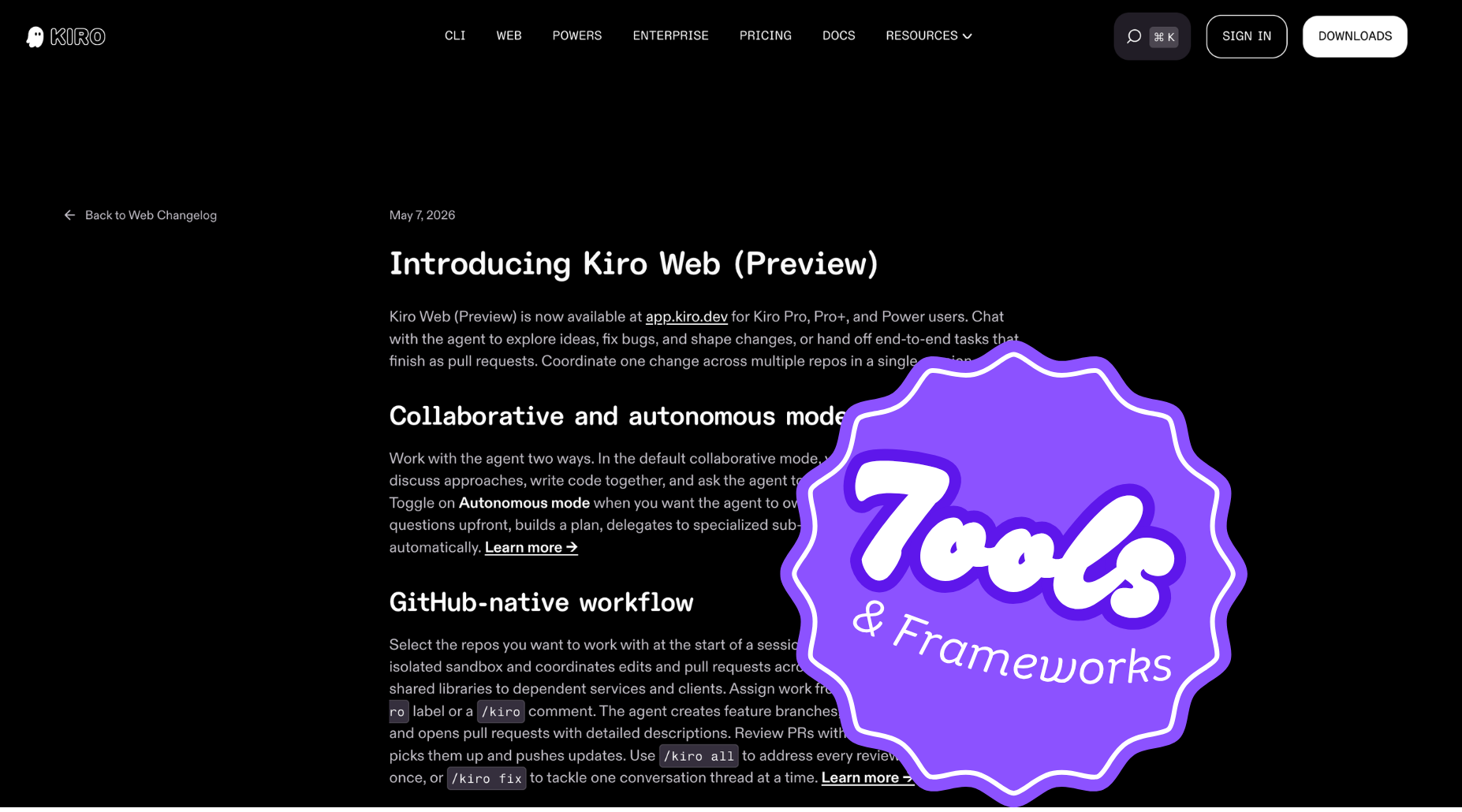
⭐ Firstly, I wanted to highlight Kiro Web (Preview) — Kiro Web is now available at app.kiro.dev for Kiro Pro, Pro+, and Power users. Chat with the agent to explore ideas, fix bugs, and shape changes, or hand off end-to-end tasks that finish as pull requests.
Other recent releases:
The AWS MCP Server is now Generally Available — The official AWS MCP Server has hit GA, providing a standardised way to connect AI agents to AWS services through the Model Context Protocol.
Nova Act Quick Deploy — A quick-deploy template for Amazon Nova Act, making it easier to get started with browser automation agents.
agent-skills — Production-grade engineering skills for AI coding agents by Addy Osmani. A fantastic collection of reusable skills to level up your agentic coding workflows.
Agent Toolkit for AWS — AWS’s official toolkit for building AI agents that interact with AWS services, providing pre-built tools and patterns for common AWS operations.
Node.js v26 — Node.js v26 is out! The latest major release brings new features and improvements to the JavaScript runtime.
Tolaria — A second brain for the AI era. Organise your notes as Markdown files, with native relationships, Git, local agents, and direct AI model providers. Free forever, open source, no account required.
Strands Agents TypeScript 1.0 — Version 1.0 of the Strands Agents TypeScript SDK is here. Build type-safe AI agents with full model provider support, custom tools, plugins, and multi-agent orchestration in Node.js and the browser.
😂 Just for Fun
This issue, our just-for-fun post, is by Eduardo Ordax on LinkedIn:
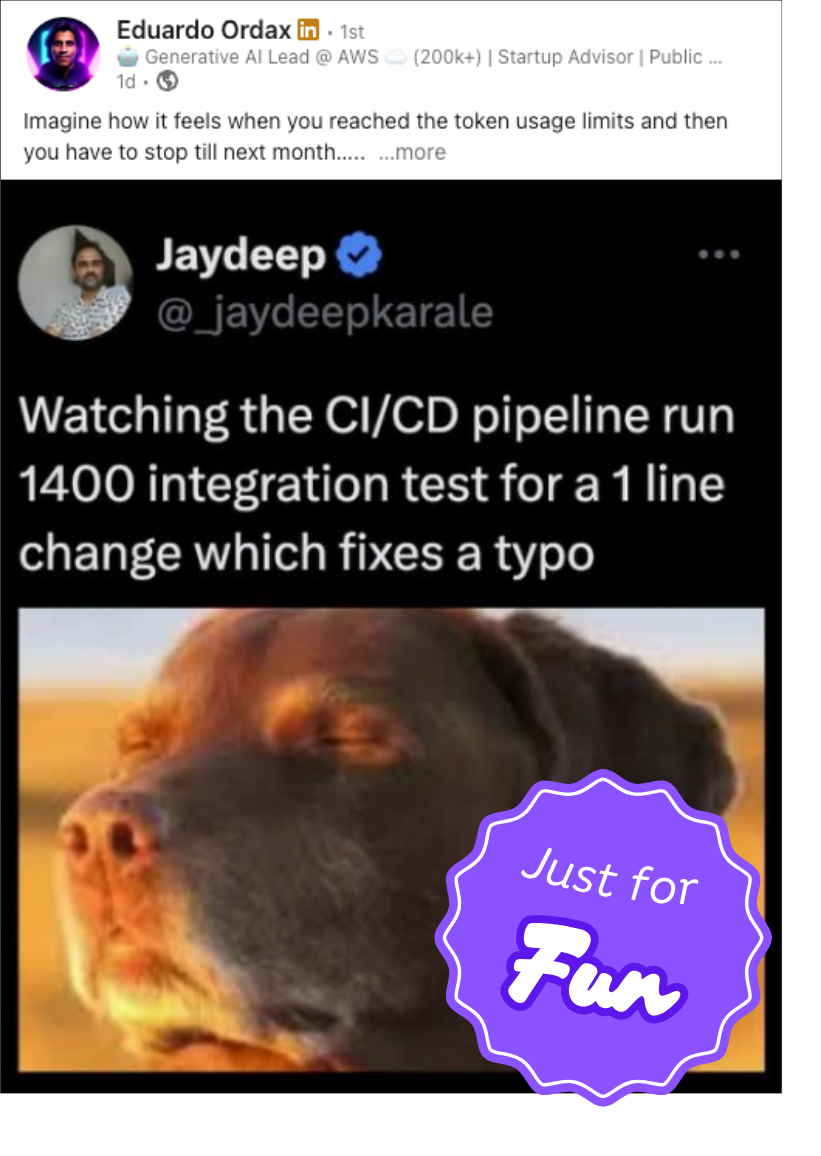
In all seriousness, I have a setup with a mixture of GitHub labels and glob patterns which allow me to bypass full pipeline deploys based on the extent of what has changed in the merged PR, and also run a huge amount of tests up front using git hooks (pre-commit, pre-push, etc.). This is especially important since I am a monorepo fan!
How do you manage this in your products? Leave a comment below.
🎙️ YouTube & Podcasts
Here are some of my favourite videos and podcasts over the past two weeks covering serverless, AI, architecture, and software engineering.
⭐ My favourite video this week was my business partner Mark Sailes on Serverless Office Hours with our friend Julian Wood, discussing how we built Study From Experts with Kiro.
Peter Eijgermans talks to Luca Mezzalira and covers ‘How to Build Real-Time Applications Using Micro-Frontends’.
The AWS Developers channel covers ‘Cut AI Token Usage by 96%? Here’s How AWS Strands Agents Does It’.
The AWS ‘Show and Tell’ channel covers ‘Getting Started Quickly with Managed Harness in AgentCore’.
James Eastham has a great video titled ‘Serverless & OpenTelemetry ❤️ Better Together’.
The Kiro team covers ‘Kiro Subagents Explained’.
AWS and Erik Hanchett cover ‘AgentCore Managed Harness: Getting Started’.
Lenny’s Podcast features ‘AI Era Skills: Why Cultivating Agency Matters More Than Job Titles’ with Max Schoening from Notion.
Weekly Case Study 🔍
This week’s case study is by Siemens on AWS:
Siemens, a leading technology company operating in more than 130 countries with over 300,000 employees, used Amazon Bedrock and Amazon Nova Foundation Models to streamline its complex global search across 15–20 different Siemens sites.
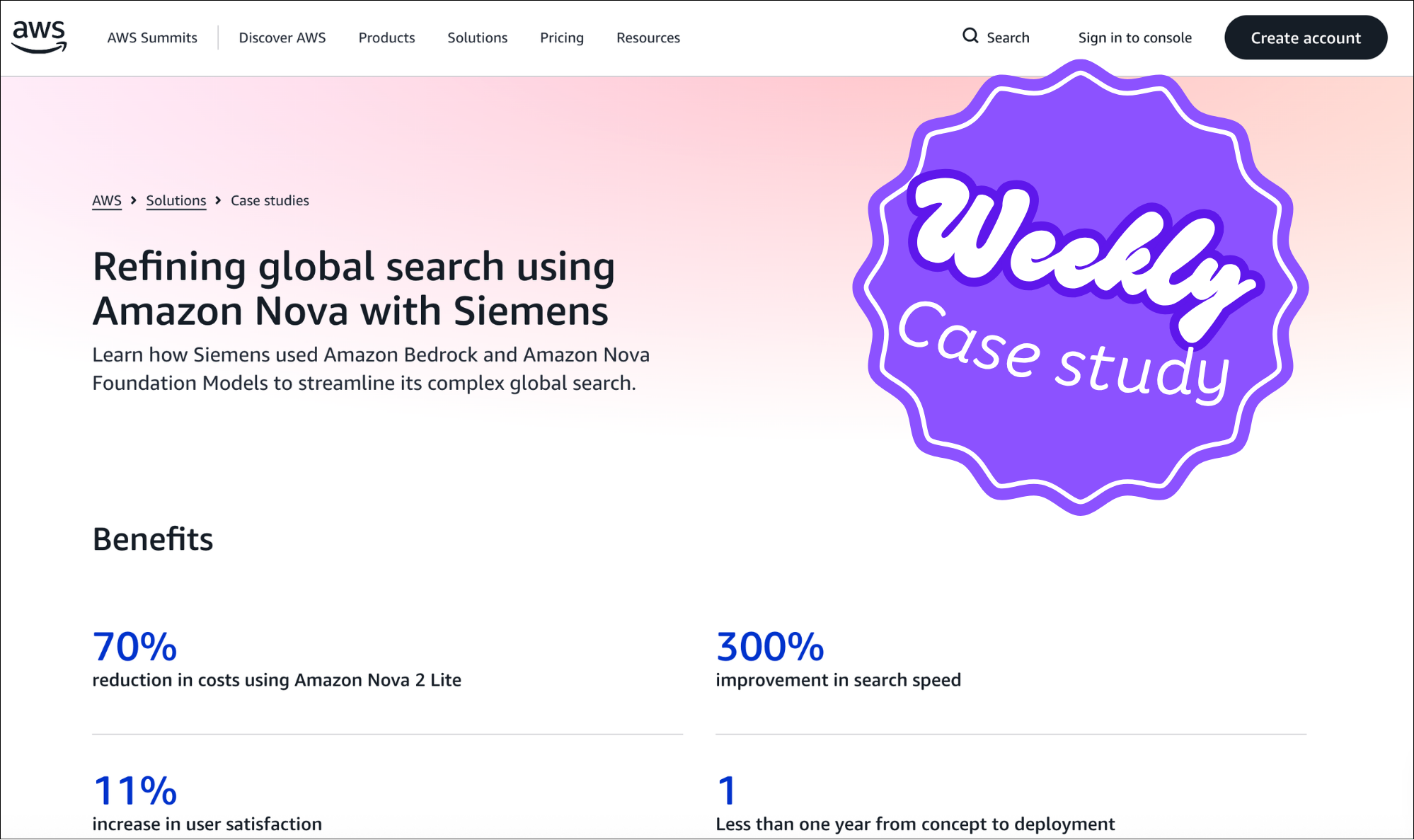
Using Amazon Nova 2 Lite, the company achieved a 70% reduction in costs, a 300% improvement in search speed, and an 11% increase in user satisfaction, all deployed in less than one year from concept to production. Customers can now query using natural language rather than restrictive keywords, and the solution has eliminated no-results searches entirely.
The architecture uses AWS Lambda functions to orchestrate validation agents, classification agents, and summariser agents, which is a great example of serverless AI in production at enterprise scale.
🗣️ Inspirational Quotes and Thoughts
This week’s inspirational thought is by Brian Kernighan covering ‘Kernighan's Law‘.

“Everyone knows that debugging is twice as hard as writing a program in the first place. So if you're as clever as you can be when you write it, how will you ever debug it?“
- Brian Kernighan
For anybody who has worked with me in teams, you will know one of my key tenets is keeping it simple. It’s even one of the top items in our software engineering and architecture manifesto at Leighton.
The reason for this is simple: the more complex you write your code with layer upon layer of abstraction and dependency injection, and the more complex your architecture, the harder it is to debug, evolve, understand, and reason about.
🗳️ Poll of the Week
In the last poll, we asked the question, “In the AI-DLC, is there still room for delivery-focused roles?”.
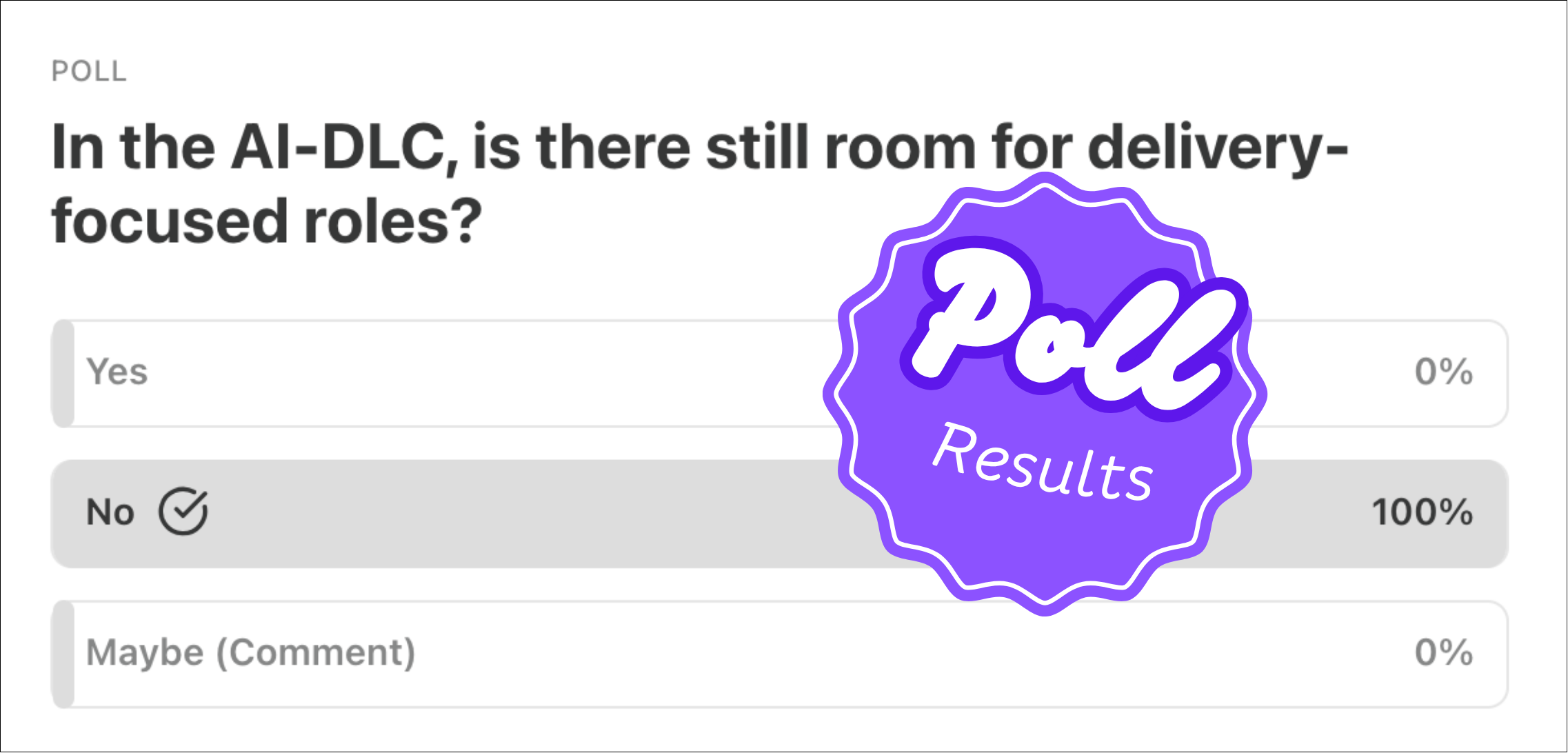
Interestingly, all 100% people said ‘No’, which is not super surprising in all honesty. With smaller cycles of work in the AI-DLC (bolts) and fewer ceremonies, most small teams can absorb this work happily.
In this issue, we ask the question, “Are you building AI agents in production?”
Please feel free to leave a comment below on your answer.
📅 Serverless Events
The following serverless events are upcoming, so mark your calendars.
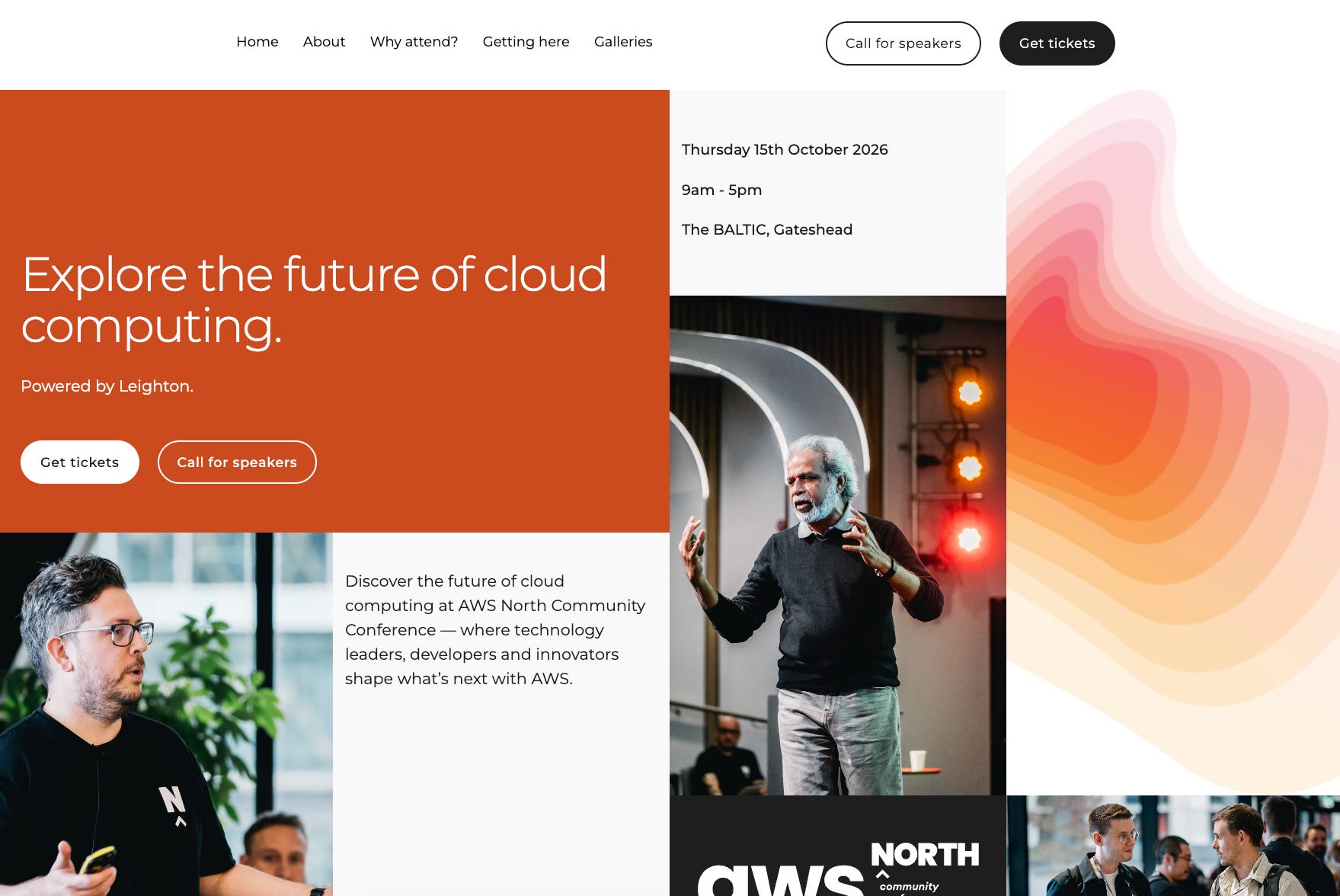
We are organising the AWS North Community Conference again this year, and CFP is currently open! Other amazing events:
AWS Comsum Birmingham - 4th June 2026.
ACD Midwest - 24th June 2026.
ACD Bengaluru - 11th July 2026.
ACD Poland - 8th Sept 2026.
ACD Adria - 22nd Oct 2026.
AWS Community Summit Birmingham - 4th June 2026.
AWS North Community Conference - 15th Oct 2026.
Would you happen to have any upcoming events that you would like to highlight? Message me below!
⭐ Spotlight
This issue’s spotlight falls on Principal Tech Lead of the AWS Kiro product, Brian Beach!

I am so impressed with everything Brian and the team are doing with Kiro right now, and how he is promoting the product and sharing new features almost daily! (Go follow Brian on LinkedIn as his posts are fantastic!)
We built the Study From Experts platform with Kiro using Spec-Driven Development and have been with them from the start.
Brian’s consistent dedication to sharing knowledge, demoing new capabilities, building amazing new features, his videos and live streams, and engaging with the community is exactly what makes the Kiro developer ecosystem thrive.
Whether it’s Kiro Web, the CLI, IDE, Powers, hooks, steering, or more, Brian is always there showing how it works in practice, not just in theory (his video shorts on LinkedIn rock)
Thank you for everything you do for the community, Brian!
Thank you for reading the latest Serverless Advocate Newsletter!
If you want to find out a little more about me, please have a look at:
https://www.serverlessadvocate.com/
See you next time,
Lee
