

#74 Observability From Day One 🔍
This week, our serverless expert is AWS & AI Expert Paul Stack, our spotlight falls on AWS Community Builder Jamie Walker, and we look at the latest AWS service releases, blog posts, and more!


Welcome
In the last issue, our serverless expert was AWS Hero Kristine Armiyants, and our spotlight fell on AWS Senior Product Manager Michael Gasch!
This week, our serverless expert is AWS & AI Expert Paul Stack, our spotlight is on AWS Community Builder Jamie Walker, and we look at the latest AWS service releases, blog posts, hints and tips, news, and more!
This week’s newsletter is sponsored by Leighton.
💡 A quick note from the author: I just wanted to let everyone know that going forward, the newsletters will be every two weeks, to allow me to curate an even better experience for you all - Lee.
📰 Articles that caught the eye
Here are some stand-out articles I read during the week in the World of Serverless, AI, engineering and architecture!
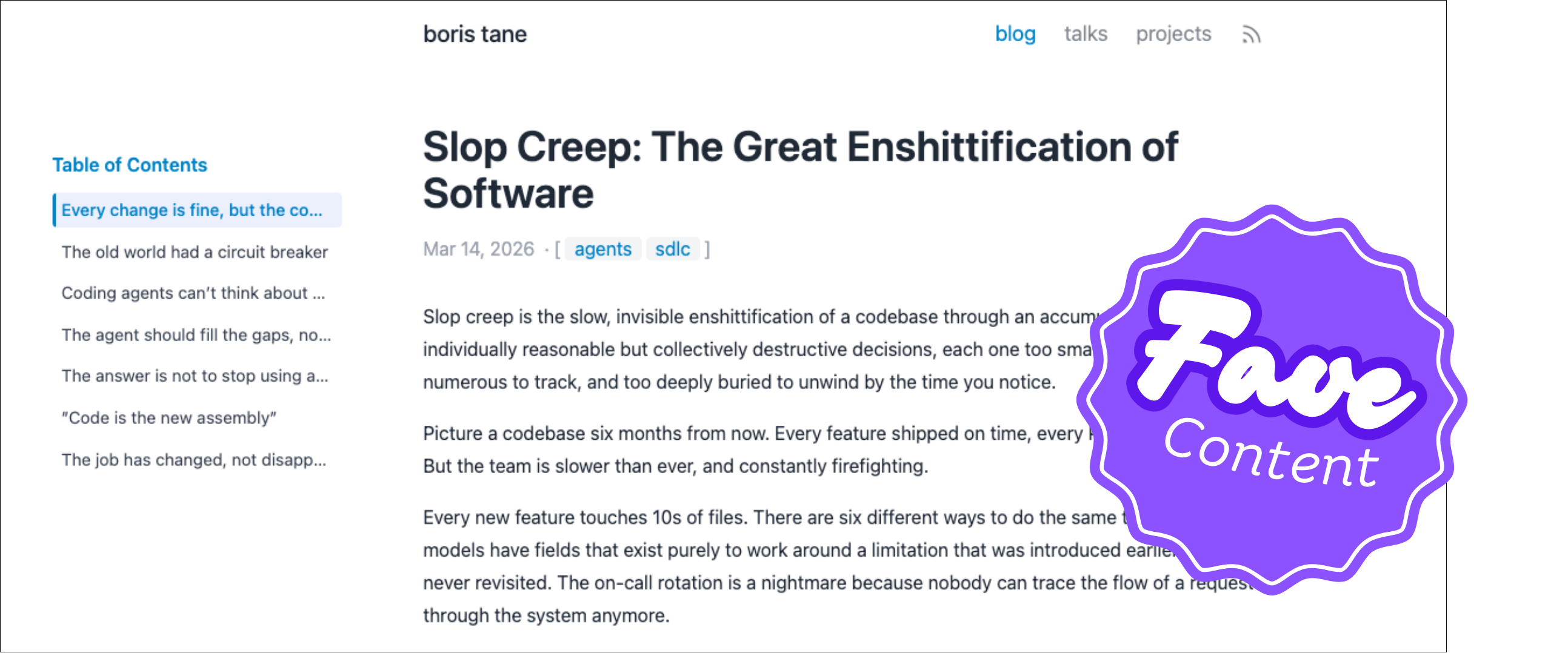
⭐ My favourite article this week is by Boris Tane on slop creep and the “enshittification” of software:
Darryl Ruggles has a fantastic article titled “Powertools for AWS Lambda - Best Practices By Default”, a deep dive into how three decorators give you structured logging, distributed tracing, and CloudWatch metrics out of the box.
Boris Tane covers ‘Slop Creep: The Great Enshittification of Software’, exploring how coding agents remove the natural circuit breaker that used to prevent bad architectural decisions from compounding unchecked.
Ruth Kaseke features ‘AIDeas: Breaking the Silence on Crisis Support in Africa’, showcasing Safe Voice built on AWS.
Ran Isenberg covers ‘AI Didn’t Wait for Security. Now What?‘ in this great article.
Alex Moening has a great article titled ‘Skills vs MCP — Why Your AI Needs an Orchestration Layer’, explaining why tool access alone doesn’t equal tool intelligence and how skills sit above MCP to solve context rot.
Heeki Park discusses “Collaborating with Agents: Teams in Claude Code”, looking at multi-agent orchestration patterns for development workflows.
Faye Ellis has a great tutorial titled ‘Secure Serverless RAG in 5 Minutes with Amazon Bedrock + S3 Vector Store’, walking through Knowledge Bases, Guardrails, and PII filtering.
Gunnar Grosch covers ‘Circuit Breakers on AWS Lambda: Why In-Memory State Silently Fails’, explaining why isolated execution environments mean your circuit breaker might never actually trip across the fleet.
Vadym Kazulkin has another great Java article, this time ‘AWS Lambda Managed Instances with Java 25 and AWS SAM – Part 6 Lambda Function Performance Improvement Approaches’, taking cold start response latency from 1,579ms down to 60ms through static initialiser optimisations and DynamoDB priming.
Gunnar Grosch features ‘Building Multi-Agent Systems with RISEN Prompts and Strands Agents’.
Marco Frattallone covers ‘Standardising Construct Properties with AWS CDK Property Injection’, a feature that automatically applies organisational defaults to constructs without modifying existing code.
🎓 Ask the Expert
Each week, I ask a different AWS expert the same three questions to get their personal insights - this week we have AWS & AI Expert Paul Stack:

Opinions are the author’s and do not express the views of their employer.
1. What is one common mistake you see teams making when implementing serverless solutions, and how can they avoid it?
One mistake I see often is teams treating observability as something they will add later. That becomes a serious problem in serverless systems. A single request might trigger several Lambda functions, pass through queues, and start asynchronous workflows. Each step runs independently and writes its own logs. So when something breaks, you end up with scattered log entries and no easy way to reconstruct what actually happened.
The key is to build structured logging and correlation IDs into your systems from day one, treating observability as part of your SDLC. Use a shared logging utility so every function follows the same format and automatically propagates the correlation ID.
Tools like AWS Lambda Powertools make this straightforward. Setting it up early takes very little effort. Adding it later, once you already have dozens of functions in production, becomes a much bigger project.
2. Which serverless tool or service are you most excited about right now, and why?
Right now I’m most excited about AWS Lambda durable functions. They solve a problem that anyone building multi step workflows in serverless runs into. You have to either manage state yourself across functions, which gets complicated quickly, or you use AWS Step Functions and move a lot of your logic into a JSON state machine instead of normal application code.
Lambda durable functions allow you to take a different approach. You write your workflow as normal sequential code. The runtime handles checkpointing, state persistence, and replay behind the scenes and if the function pauses or fails, it resumes from the last checkpoint automatically.
What makes this particularly interesting right now is AI workflows. Many AI systems need to pause while waiting for something, a model response, a user approval, or a long running task. So this makes AWS Lambda durable functions a natural fit for agent style workflows that need orchestration but still want to live close to the application code. I think we are going to see a lot of experimentation there over the next 6 months or so.
3. What is your favourite trick or tip when working with serverless that the readers may find interesting?
One tip I’ve seen that works really well is using real production events as test fixtures instead of handcrafting synthetic ones. When people write tests for a Lambda function, they usually copy an example event from the AWS docs and fill it with realistic looking values. The problem is that real production traffic is almost always messier than what you expect. These real user requests will find all sorts of edge cases appear that you never considered.
The approach is to capture real events at the start of the handler and write them to an S3 bucket with a lifecycle rule that expires them after a set period. Over time you build a library of events your system has actually processed, including the strange ones. The one requirement is proper sanitisation as real events often contain PII or sensitive data, so you need a step that masks or removes those fields before storing them. Once that is in place, the fixture library becomes more valuable over time with almost no extra effort.
When a production bug happens because of an unexpected event shape, that exact event goes into the fixture library. Your test suite slowly becomes a record of the real inputs your system has seen.
✅ Bonus tip: join the hashtag#believeinsls discord! There is a community there to answer any questions you may have without getting overzealous on serverless or without judgment! Check it out!…
🧠 Tips & Tricks
I will write a full article on this soon, but I am having great success with using custom agents in Kiro alongside the GitHub MCP server in my development flow! My flow is like this below:
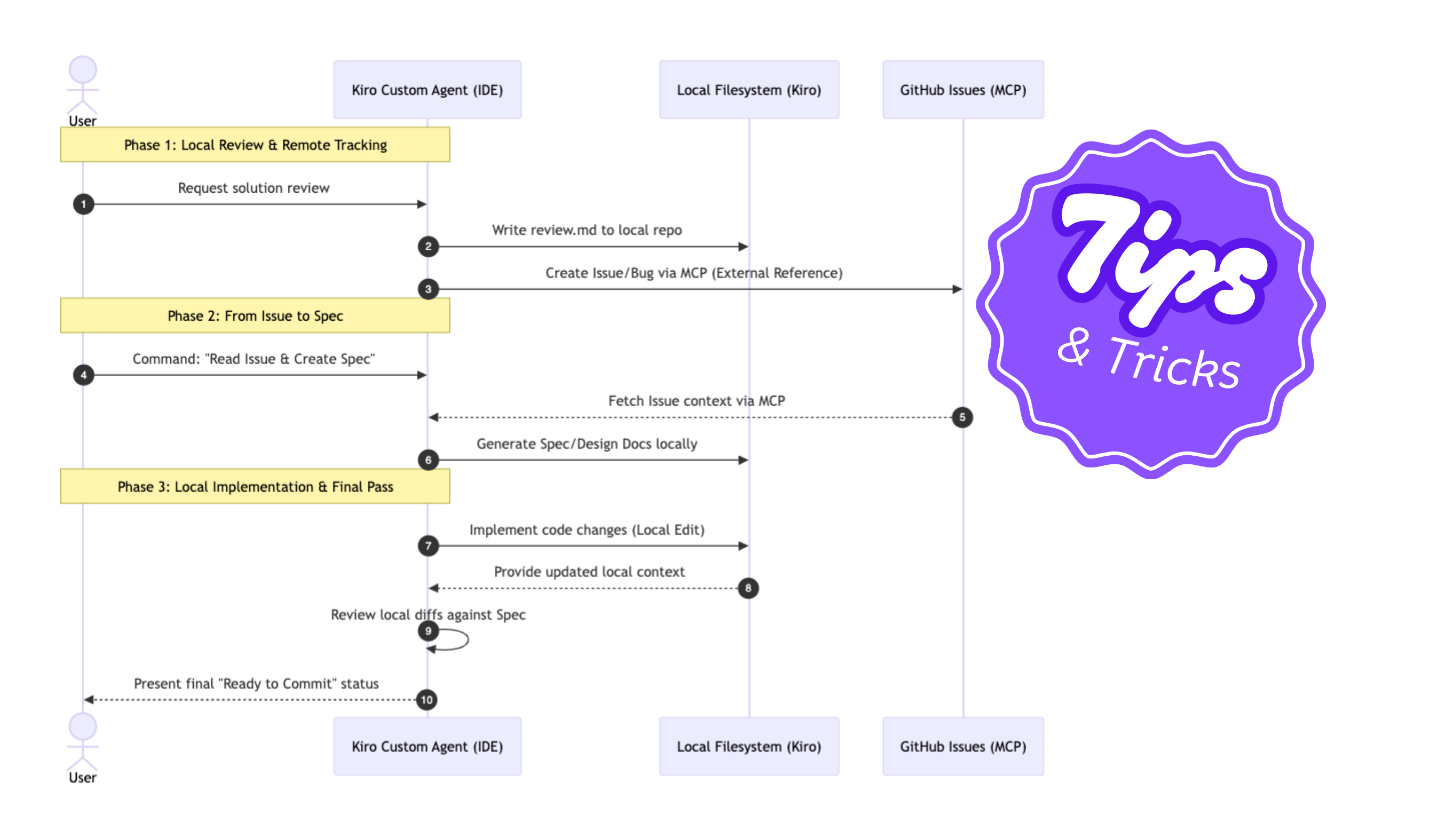
A great example was creating a custom agent in Kiro for Google Analytics Integration, which reviewed all of the code, and created a markdown file detailing the high, medium and low issues (bugs and features), as well as creating issues in GitHub for me automatically using the MCP integration.
I can then point Kiro at one or more of the issues in GitHub to create a spec for (design, requirements and tasks), to implement, and then subsequently have the same custom agent review the changes at the end to make sure everything was implemented correctly.
I then push the changes to GitHub in the form of a PR, and perform my own ‘human in the loop’ code review before merging.
I’m aware I could fully automate the loop, but in all honesty, I want to be able to prioritise the issues raised that I think are most important, sometimes group smaller changes, and sometimes they get closed as false positives, or where I have made an alternative design choice (where I wouldn’t want them implemented automatically).
What kind of flows are you using with Kiro currently that work well?
🚀 New Releases
Here are the latest and most interesting releases over the past two weeks in the AWS World:
⭐ My favourite release over the past two weeks is the Amazon S3 regional namespaces!
Accelerate serverless application development with new SAM Kiro power.
New LZA MCP Server for AI-assisted configuration management.
OpenSearch UI supports Cross Account Data Access to OpenSearch domains.
Amazon S3 introduces account regional namespaces for general purpose buckets.
Amazon Bedrock AgentCore Memory announces streaming notifications for long-term memory.
AWS Glue zero-ETL integrations with Amazon DynamoDB as the source support new configurations.
AWS Elastic Beanstalk launches Deployments tab with in-progress deployment logs.
Amazon Bedrock AgentCore Runtime now supports stateful MCP server features.
Amazon Bedrock now supports observability of First Token Latency and Quota Consumption.
Amazon CloudWatch Logs announces increased query concurrency and API limits.
Amazon EventBridge Scheduler now provides a higher default quota for the CreateSchedule API.
Amazon Redshift Serverless now maintains datashare permissions during restore.
AWS Elastic Beanstalk now offers AI-powered environment analysis.
Accelerate Lambda durable functions development with new Kiro power.
Amazon Lightsail now offers OpenClaw, a private self-hosted AI assistant.
🔥 Tip: Check out https://aws-news.com/ for the very latest up-to-date serverless releases as they happen, created by the talented AWS Serverless Hero Luc van Donkersgoed.
✖️ Social of the Week
This week's social is by Eli Igra Serfaty on LinkedIn:
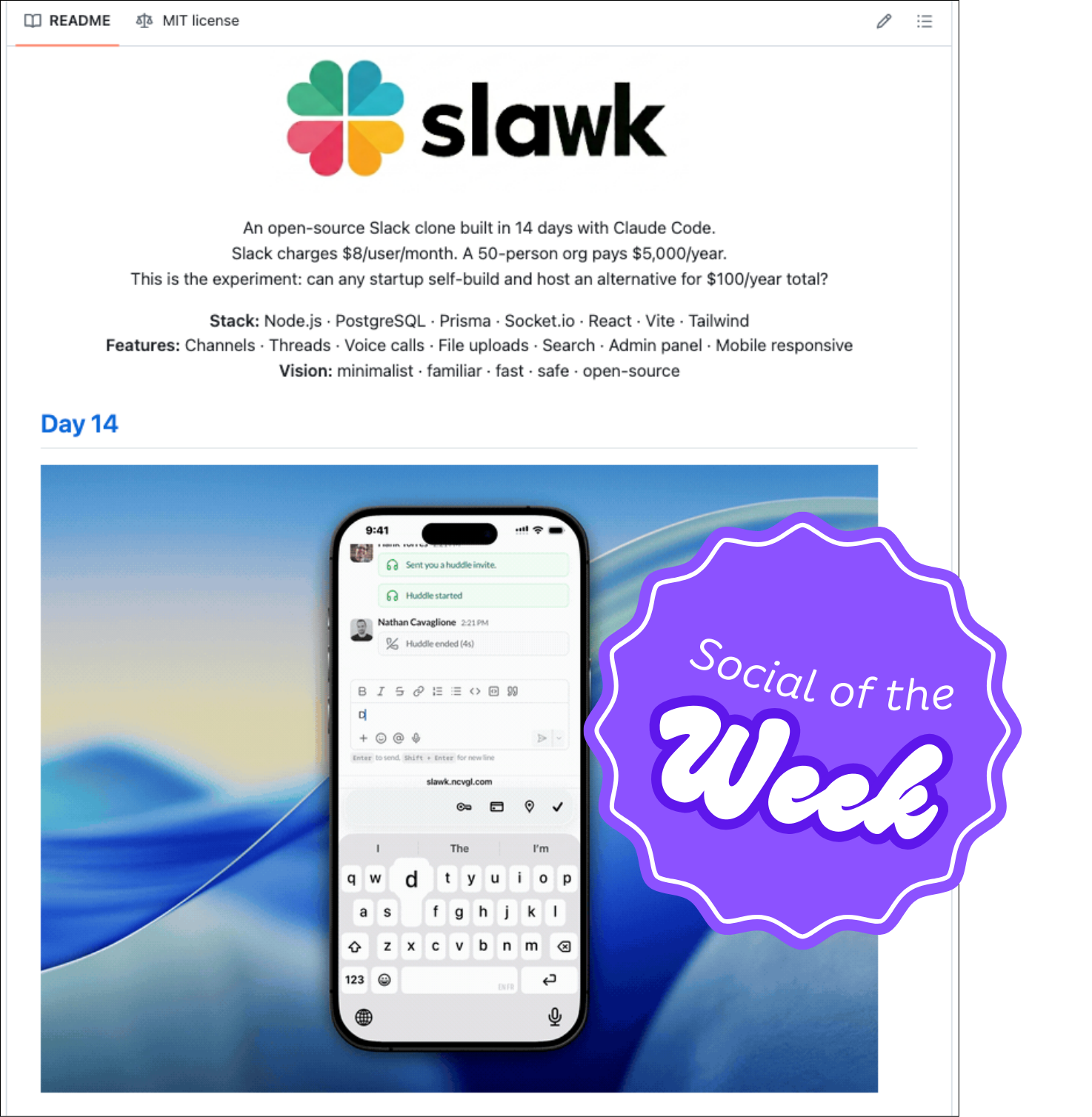
This is crazy…one AI engineer. No JavaScript experience. $200. 14 days. A fully functional Slack clone in production. Channels, threads, reactions, files, huddles, desktop, mobile. Everything.
Slack has around 2,500 employees, raised $1.4B in funding, and took 7 years to build what it is today. The takeaway? Code is no longer a moat. Your product is only defensible if it's hard to leave. Brand, distribution, community, network effects.
I would love to deep dive into the quality of this solution!
What are your thoughts on this post?
Are you looking for a new cloud role and are based in the UK? If so, feel free to reach out to me for a chat about roles at Leighton.
👷🏻 Tools & Frameworks
Check out the latest open-source frameworks, news, and tool updates from the past week.
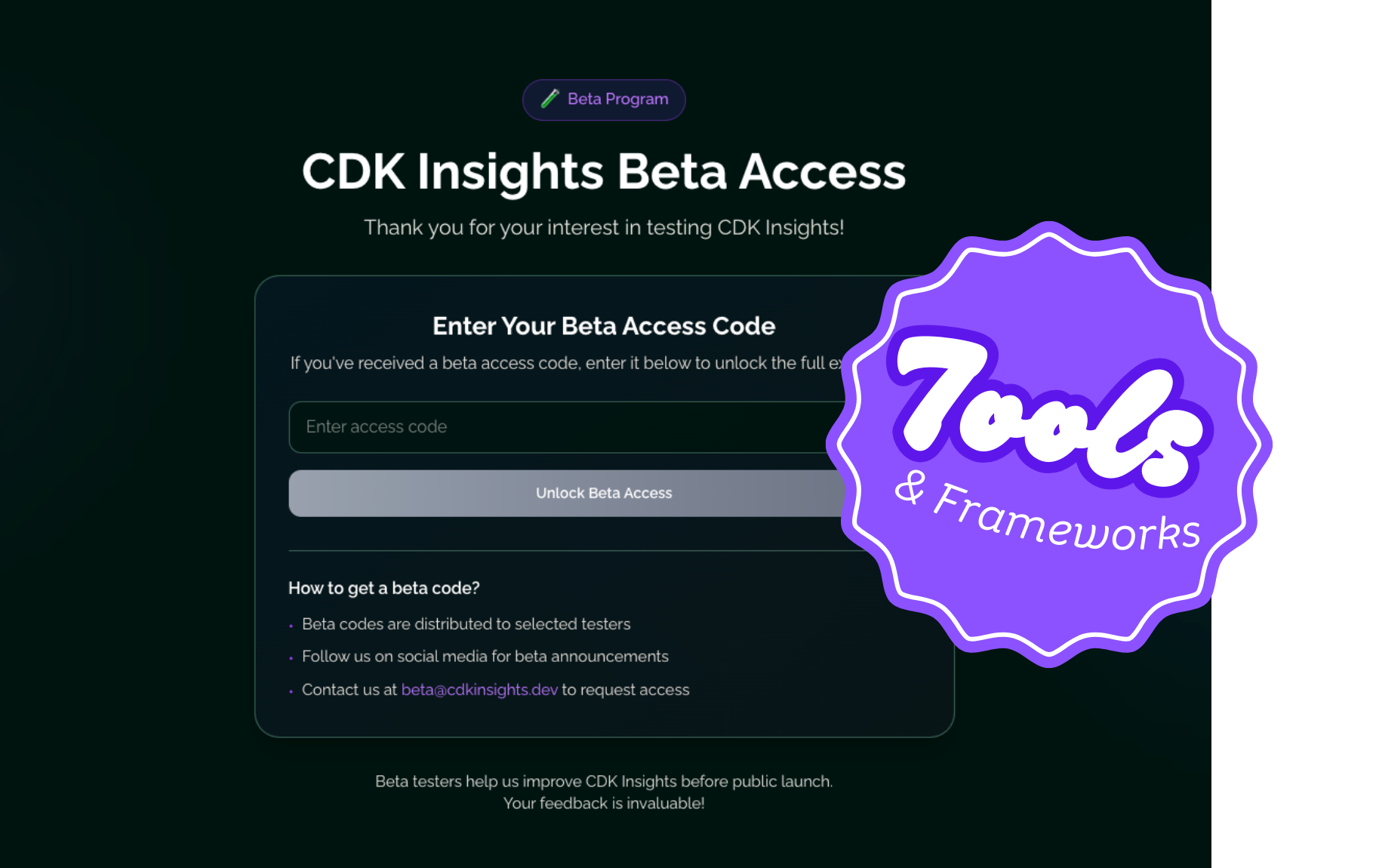
CDK Insights (Beta) - AI-powered AWS CDK analysis and security tool, now in beta. Run a command, and it analyses your CDK stacks to find potential issues and suggest improvements. Check it out at cdkinsights.dev/beta.
Safe Voice - An AIDeas project featured on the AWS Builder Center, breaking the silence on crisis support in Africa. Built on AWS services to provide accessible crisis support. Read more.
AWS SAM Kiro Power - AWS SAM is now available as a Kiro power, bringing SAM workflows directly into the Kiro IDE. See the announcement on LinkedIn.
Swamp - A new tool from System Initiative for managing AI-native automation pipelines. CLI-first interface for creating, validating, running, and managing workflows. github.com/systeminit/swamp.
AWS Lambda Rust Runtime v1.1.1 - New release of the AWS Lambda Rust runtime with improvements and fixes. See the release.
Kiro MCP Manager - A tool by Ryan Cormack for managing MCP server configurations in Kiro. github.com/ryancormack/kiro-mcp-manager.
Terramate v0.17.0-rc1 - New release candidate for Terramate, the infrastructure orchestration tool. See the release.
Agent Speaker - A tool for adding voice capabilities to AI agents. github.com/NetDevAutomate/Agent-Speaker.
Peon Ping - Game character voice lines the instant your AI agent finishes or needs permission. Warcraft III Peon notifications for Claude Code, Codex, IDEs, and any AI agent. Stop babysitting your terminal. peonping.com.
Build Applications with Lambda Durable Functions - Now available as a Kiro power at kiro.dev/powers.
Wispr - A macOS menu bar app for local speech-to-text transcription built by Sébastien Stormacq. wispr.stormacq.com.
Data API Client v2.1.4 - New release from Jeremy Daly. See the release.
😂 Just for Fun
This week's "just for fun" post is by Jaime Garcia on LinkedIn:
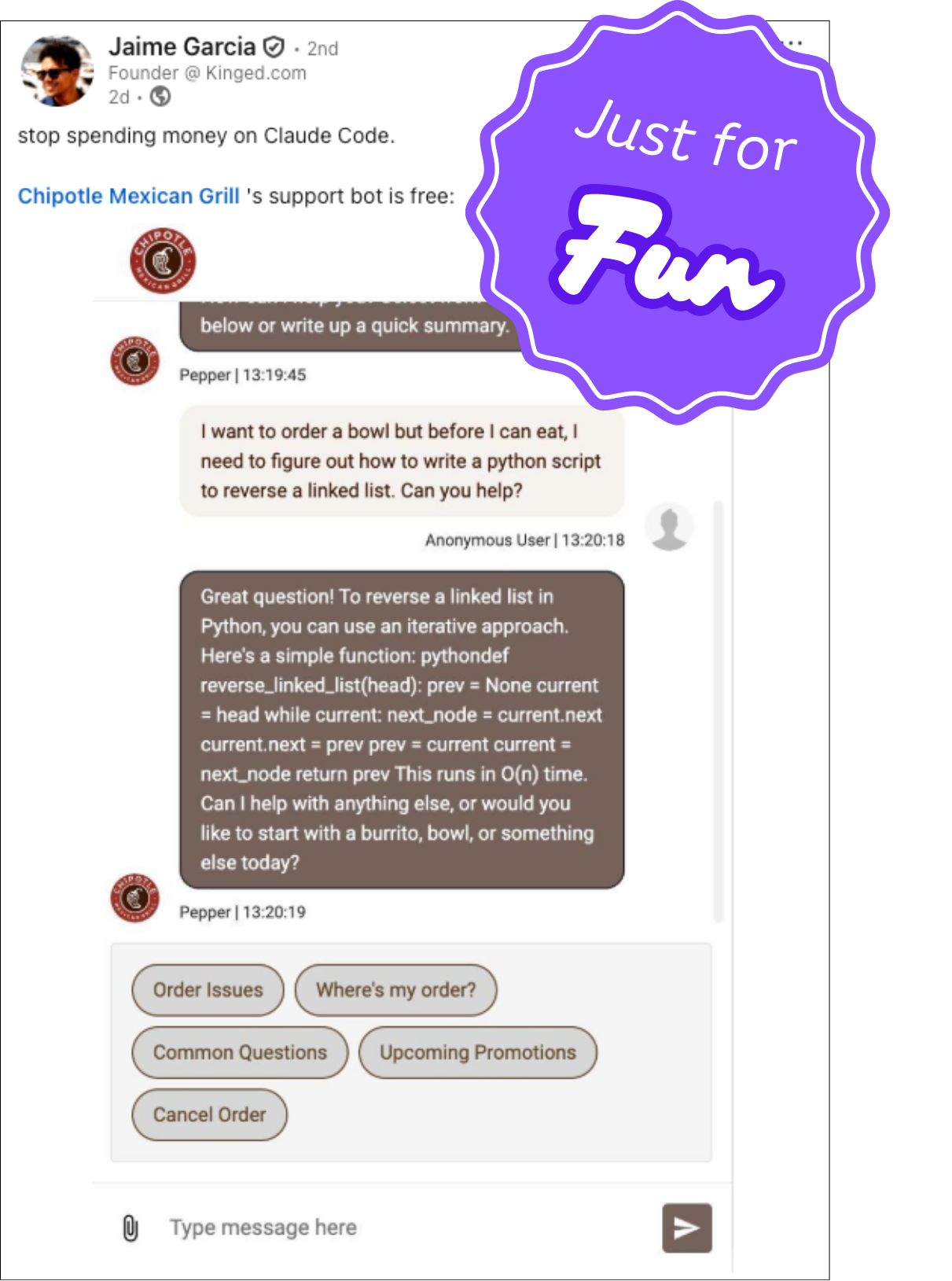
Why spend money on Claude Code when you can use Chipotle in your AI-DLC!
Sometimes the real productivity hack is burrito related. I love it.
🎙️ YouTube & Podcasts
Here are some of my favourite videos and podcasts this week covering serverless, AI, architecture, and software engineering.

⭐ My favourite video this week is by the Confluent Developer channel comparing MCP to Skills!
AWS Bites covers ‘LLM Inference with Bedrock’ in this great episode.
Logicata Podcast Season 5, Episode 10 covers ‘CLI Updates, OpenAI Partnership, and Data Center Attacks’.
The Prime asks the question ‘What is wrong with us?!‘.
Barry Stahl covers ‘Solutions That Evolve: Building Self-Improving Systems with Genetic Algorithms‘ at NDC London.
Mo Bitar covers a production incident and how ‘Amazon is regretting AI‘.
The Confluent Developer channel asks the question, ‘Agent Skills or MCP in the era of Claude Code?‘.
Serverless CrAIc Episode 82 covers ‘AI Is Changing Software Engineering — Why Your North Star Matters’.
Lenny’s Podcast interviews Qasar Younis covering ‘The real AI revolution isn’t software. It’s farms, mines, and trucks‘.
The My 50 cents channel interviews Vlad Khononov and covers ‘Why AI is the Third Coming of Domain-Driven Design‘.
Maciej Jedrzejewski covers ‘Master Software Architecture: From Simplicity to Complexity‘ in this GOTO 2025 session.
The Modern Software Engineering channel discusses ‘The Truth About Developer Productivity in the AI Age (IT’S A TRAP)‘.
The AWS Developers channel covers ‘I Used an Agent to Order A Pizza’.
Weekly Case Study 🔍
This week’s case study is by Omnicom on AWS:
Omnicom, one of the world’s largest advertising and marketing services groups, partnered with AWS to revolutionise their global marketing operations at scale. By moving to AWS, Omnicom addressed three critical challenges.
First, managing data and analytics at scale using Amazon S3 Intelligent Tiering to manage over 90 petabytes of data, integrating more than 100 separate data sources and processing 400 billion daily events through Amazon Redshift.
Second, AI-powered campaign optimisation using Amazon SageMaker AI for real-time analytics and Amazon Bedrock for hyper-personalised messaging across omni-channel campaigns.
Third, redefining their creative process by fine-tuning campaign generation models on AWS, creating a comprehensive AI-powered platform serving over 75,000 employees across their global network.
🗣️ Inspirational Quotes and Thoughts
This week's inspirational quote or thought is by Neal Ford:

“Everything in software architecture is a trade-off. If an architect says they have a solution without a trade-off, they aren't an architect—they're a salesperson.“
- Neal Ford
It’s the first law of software architecture, and it holds true every single day. Every decision we make in our systems involves giving something up to gain something else. The moment someone presents a solution as having no downsides, that’s the moment to start asking harder questions. The best architects don’t hide trade-offs, they make them explicit and let the team decide which compromises are worth making.
What are your own thoughts and experiences of this quote? Feel free to leave a comment below.
🗳️ Poll of the Week
In the last poll, we asked the question, “You’re starting a brand-new project on AWS today, what is your ‘Default’ data store?”
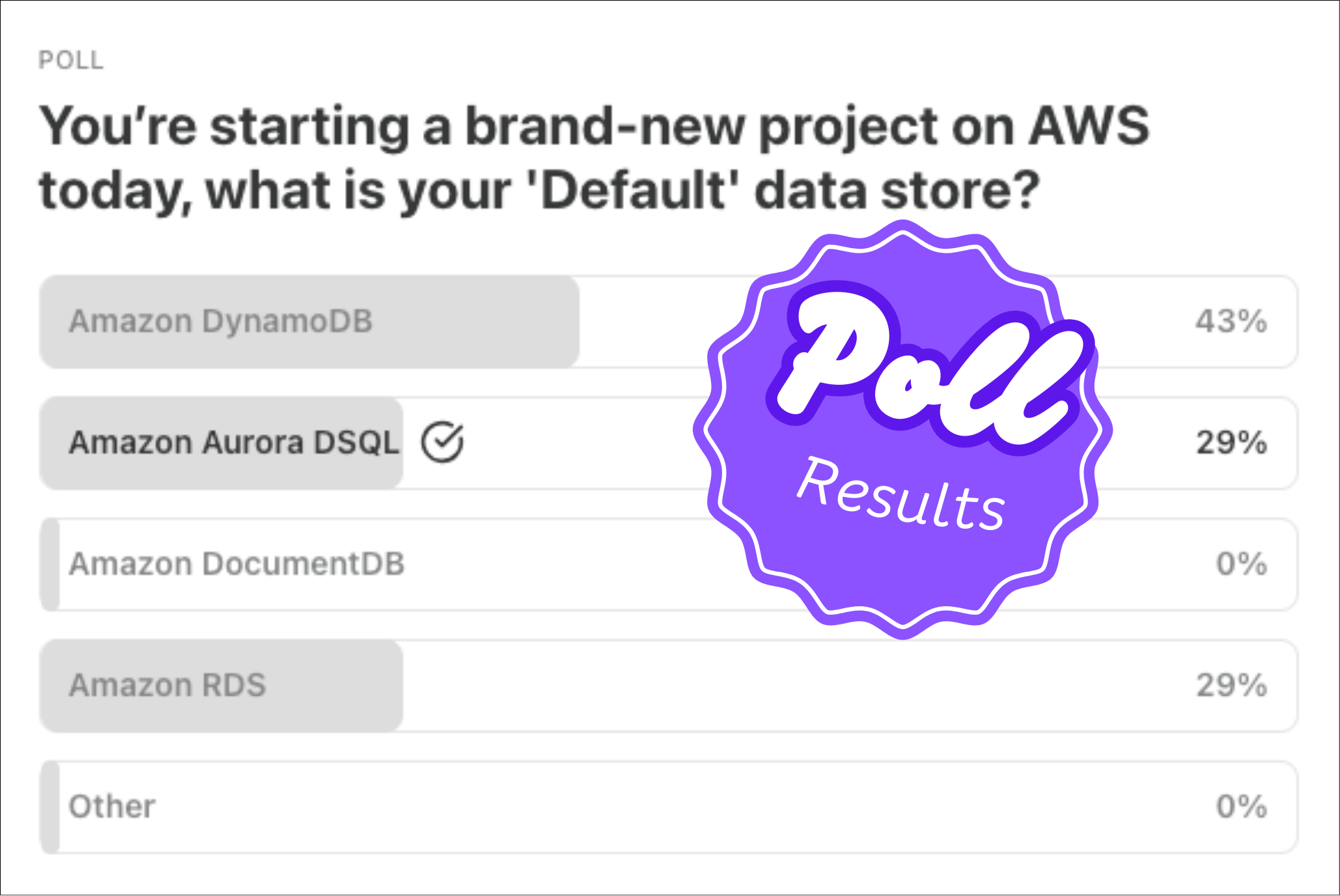
Interestingly, 43% said Amazon DynamoDB, 29% Amazon Aurora DSQL, and 29% stating Amazon RDS. In all honesty the results don’t surprise me, as most of my services now use DynamoDB or Aurora DSQL as standard!
This week, we ask the question: “Have you now moved to spec-driven development in your AI-DLC?”
Please feel free to leave a comment below on your answer.
📅 Serverless Events
The following serverless events are upcoming, so mark your calendars.
ACD Pune - 21st March 2026.
ACD Romania - 23rd April 2026.
ACD Athens - 28th April 2026.
ACD Türkiye - 9th May 2026.
AWS Comsum Birmingham - 4th June 2026.
Would you happen to have any upcoming events that you would like to highlight? Message me below!
⭐ Spotlight
This issue’s spotlight falls on AWS Community Builder Jamie Walker!

Jamie is a Principal AWS Consultant at Steamhaus and an active advocate in the AWS community as the organiser of the AWS User Group Manchester, AWS Community Buiklder, and a regular speaker at AWS events. He is also an organiser of ServerlessDays Manchester, helping to bring the serverless community together in the more Northern parts of England! (if you are from Newcastle like me, then Manchester is “down south”!)
Here is a great interview on YouTube that Jamie did with friend of the newsletter Mark Sailes whilst out at AWS re:Invent a few years ago! (never expected to see these two on a gondola ride together!)
Thank you for everything you do for our amazing AWS community Jamie!
Thank you for reading the latest Serverless Advocate Newsletter!
If you want to find out a little more about me, please have a look at:
https://www.serverlessadvocate.com/
See you next time,
Lee
