

#71 Back to Basics 👌🏽
This week, our expert is AWS Community Builder Damien Jones, our spotlight falls on AWS Principal Cloud Technologist Morgan Willis, and we look at the latest service releases, news, & more!


Welcome
In last week’s issue, our serverless expert was AWS Community Builder Matheus das Mercês, and our spotlight fell on AWS Hero Kristine Armiyants!
This week, our serverless expert is AWS Community Builder Damien Jones, our spotlight falls on AWS Principal Cloud Technologist Morgan Willis, and we look at the latest AWS service releases, blog posts, hints and tips, news and more!
This week’s newsletter is sponsored by Leighton.
A Glimpse into My Week 🎤
This week, I wrote a ‘back to basics’ article on ‘Amazon Cognito Custom Email Lambda Trigger‘:

In the article, we covered:
✔️ We explain what the Custom Message Lambda trigger is and when it is invoked.
✔️ We cover all trigger sources: SignUp, ForgotPassword, AdminCreateUser, ResendCode, and more.
✔️ We walk through CDK configuration and Lambda handler code examples.
✔️ We reference other Cognito triggers and templating approaches.
Go check it out!
📰 Articles that caught the eye
Here are some stand-out articles I read during the week in the World of Serverless, AI, Engineering and Architecture!
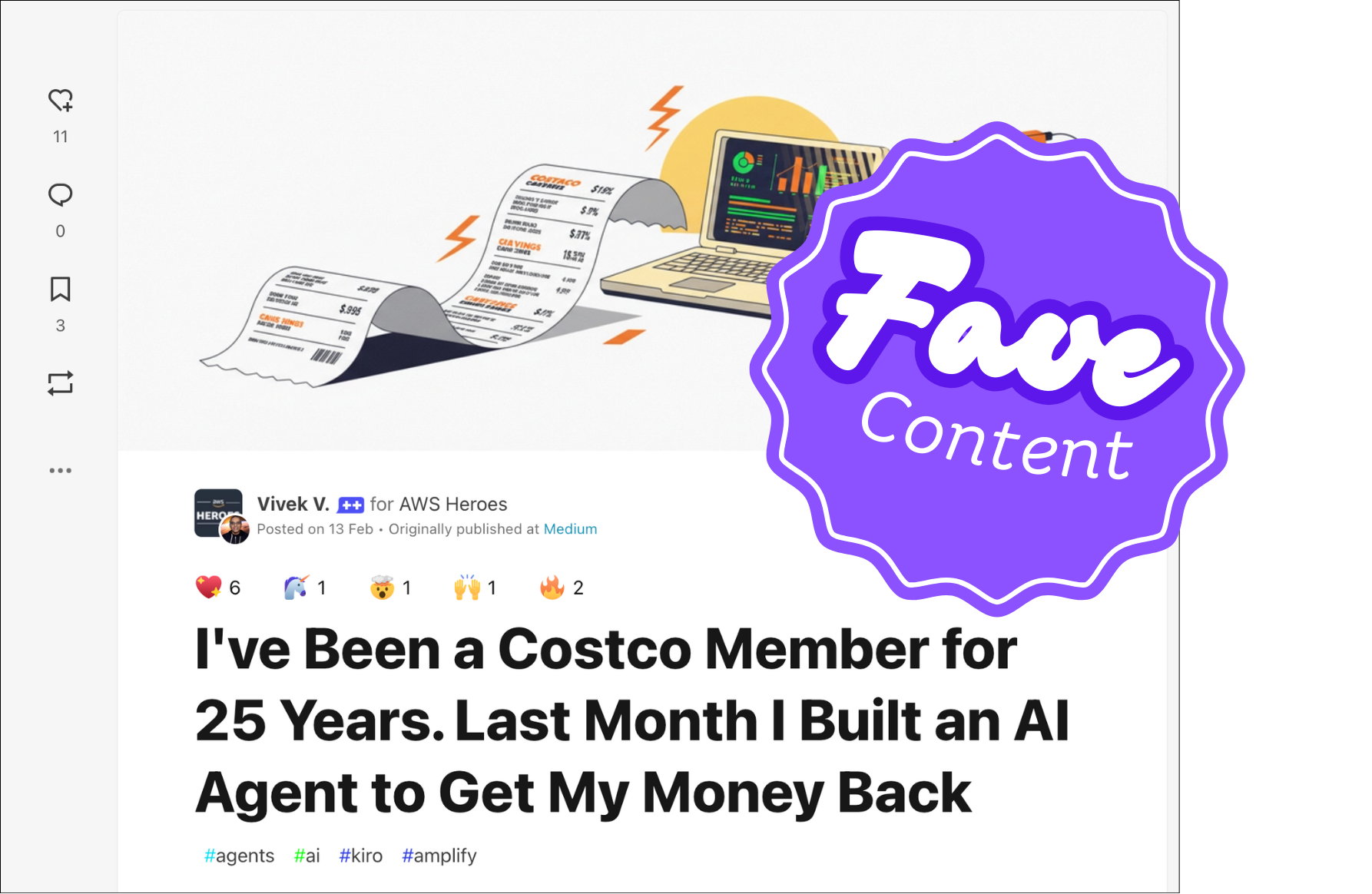
⭐ My favourite article this week is by AWS Hero Vivek Velso and how he is saving money with AI!
Monica Colangelo covers ‘Integrating Lambda Durable Functions into a Step Functions Workflow‘.
Darryl Ruggles has a great article titled ‘AWS Lambda Durable Functions - Build a Loan Approval Workflow with Checkpoints, Callbacks, and a React Frontend‘.
Joe Hellerstein discusses ‘Coding Agents Meet Distributed Reality‘.
Tiger Abrodi has an interesting article titled ‘Making Next.js Apps Faster: A Practical Performance Guide Beyond Next.js‘.
Dennis Traub covers ‘How a subtle MCP server bug almost cost me $230 a month‘.
Jeremy Daly discusses ‘Context Is Now a First-Class Architectural Concern‘.
Roman Bugaev has an interesting article titled ‘DynamoDB at Scale: A story about history‘.
Vivek Velso covers ‘I’ve Been a Costco Member for 25 Years. Last Month I Built an AI Agent to Get My Money Back‘.
🎓 Ask the Expert
Each week, I ask a different serverless expert the same three questions to get their personal insights - this week, we have AWS Community Builder Damien Jones:

Opinions are the author’s and do not express the views of their employer.
1. What is one common mistake you see teams making when implementing serverless solutions, and how can they avoid it?
Using complexity because they can, not because they should.
There's always a temptation in the tech industry to use the newest frameworks, services and features. But not every situation warrants them, and unnecessary complexity quickly gets in the way of adding value and keeping things maintainable. Someone's going to have to take care of this, and that someone might be an on-call person staring at your ball of mud at 3am. And yes, I have been that on-call person in a previous life!
Sometimes, being wise is knowing when to adopt a new service. Other times, it’s knowing when to refrain. Keep things simple at first, and only introduce complexity when it clearly enhances reliability, cost-effectiveness or speed. Complexity should be earned, not assumed.
2. Which serverless tool or service are you most excited about right now, and why?
I took a strong interest in S3 Vectors last year and was pleased to see it go GA.
Before S3 Vectors, your AWS options for vector stores included OpenSearch, Aurora Postgres and Neptune. Each is fully capable, but has its own nuances and learning curve. When S3 enters a space it usually brings its characteristic simplicity, and a straightforward vector store with a low barrier to entry is very valuable in the current AI landscape.
S3 Vectors doesn’t replace the need for specialised vector databases. It doesn’t match OpenSearch’s speed, Aurora PostgreSQL’s query flexibility or Neptune’s relationship depth. But it is simple, cost-effective and easy to adopt - making it a great way to get AI projects off the ground without running a bunch of new infrastructure.
I really want to try out Lambda Durable Functions when I get a chance, too. They present an interesting alternative to Step Functions, and I'm keen to see how they work under the hood.
3. What is your favourite trick or tip when working with serverless that the readers may find interesting?
Read the manuals. Check your facts. Validate your assumptions and mental models constantly. Yup - the boring tips are often the best ones.
Our industry moves quickly. It’s easy to assume major changes only occur around re:Invent or with AI, but all sorts of updates, requirement changes and behaviour shifts happen throughout the year. Something that has been true for years can suddenly change.
Websites like aws-news.com and lastweekinaws.com help you stay informed, but even then you can’t know everything. Make it a habit to check the docs and release notes before designing or deploying something, as five minutes of verification can save hours of debugging and help to either reduce (or at least maintain!) your AWS bill.
✅ Bonus tip: join the hashtag#believeinsls discord! There is a community there to answer any questions you may have without getting overzealous on serverless or without judgment! Check it out!…
🧠 Tips & Tricks
This week’s tip is by Brian Beach at AWS on LinkedIn, covering how we can now customise subagents in Kiro so they are specialised to specific tasks!

In the Kiro IDE, you can simply type /custom-agent-creator {persona}
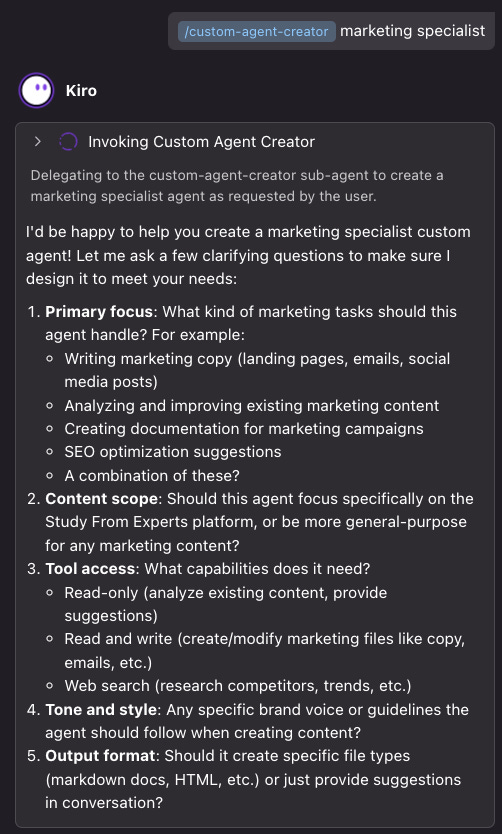
Some examples I have are agents specialised in marketing, SEO, security, and cost optimisation.
The Kiro team are absolutely killing it right now with the amount of features they are releasing weekly!
🚀 New Releases
Here are the latest and most interesting releases this week in the AWS World:
⭐ My favourite release this week is the new features in Aurora DSQL! Check them out below!
Amazon Aurora DSQL adds support for identity columns and sequence objects.
AWS expands Resource Control Policies support to Amazon DynamoDB.
Amazon S3 Tables add partition and sort order definition in the CreateTable API.
Amazon Bedrock AgentCore Browser now supports proxy configuration.
AWS Elastic Beanstalk now supports GitHub Actions for automated application deployment.
Amazon OpenSearch Serverless now supports Collection Groups.
🔥 Tip: Check out https://aws-news.com/ for the very latest up-to-date serverless releases as they happen, created by the talented AWS Serverless Hero Luc van Donkersgoed.
✖️ Social of the Week
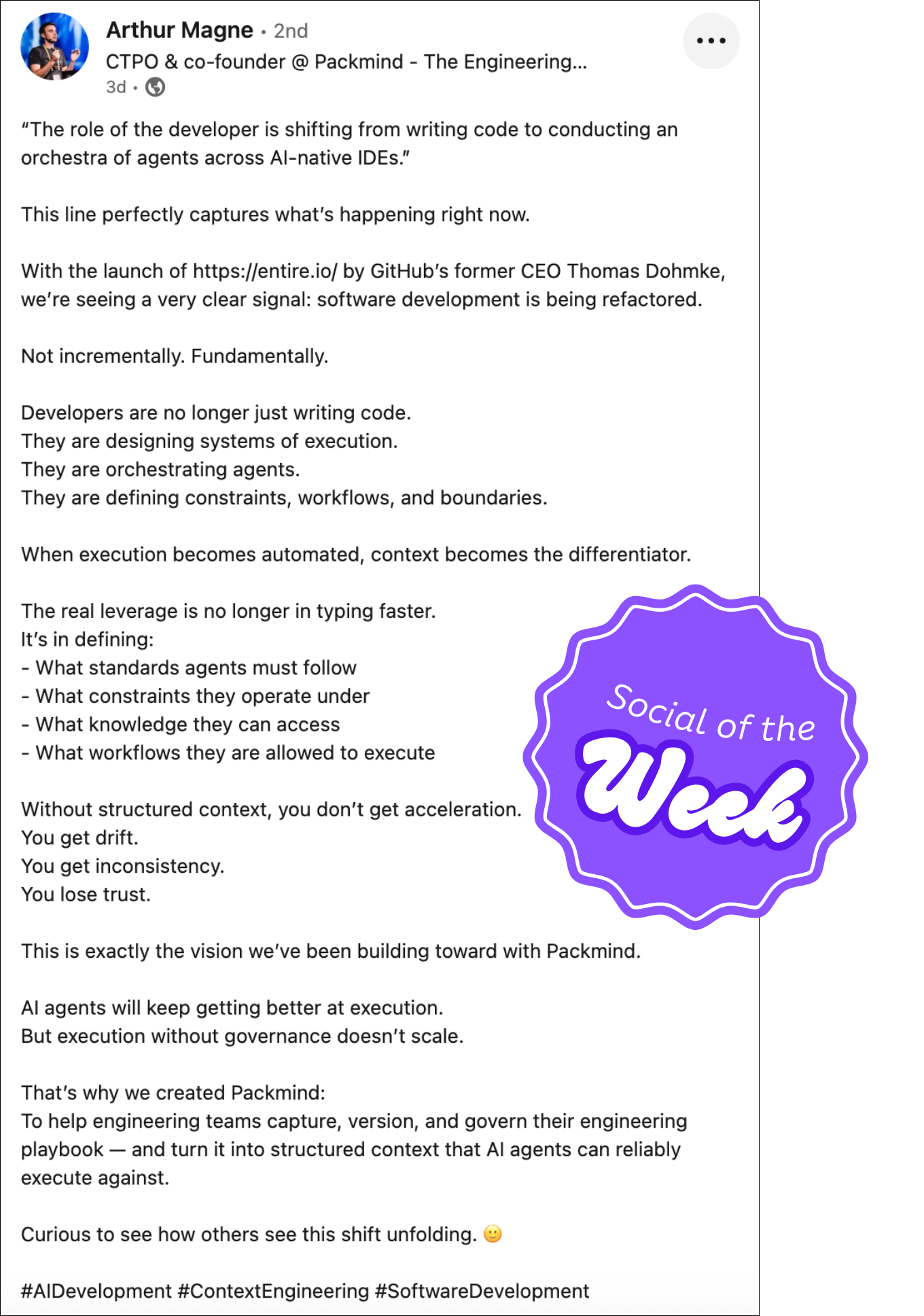
This week’s social is by Arthur Magne on LinkedIn:
What are your thoughts on this post? What are your own experiences?
Are you looking for a new cloud role and are based in the UK? If so, feel free to reach out to me for a chat about roles at Leighton.
👷🏻 Tools & Frameworks
Check out the latest open-source frameworks, news, and tool updates from the past week.
cdk-agc - CDK Assembly Garbage Collector - Clean up unused assets in your
cdk.outdirectory, remove locally built Docker images, and delete temporary CDK directories.vera-aws - Local AWS EC2 emulator. Version 0.1 : 89 resource types — VPCs, instances, security groups, volumes, and more (complete list at the end) — running on your machine with no AWS account needed.
aidlc-workflows - AI-DLC is an intelligent software development workflow that adapts to your needs, maintains quality standards, and keeps you in control of the process.
outlook-mcp - This is a modular implementation of the Outlook MCP (Model Context Protocol) server that connects Claude with Microsoft Outlook through the Microsoft Graph API.
claude-forge - A Claude Code agent that builds its own tools.
wbr-app - The WBR App is a web application that takes your organisation's business data and builds an HTML-based report called a WBR Report, so that you can implement an Amazon-style WBR process in your organisation.
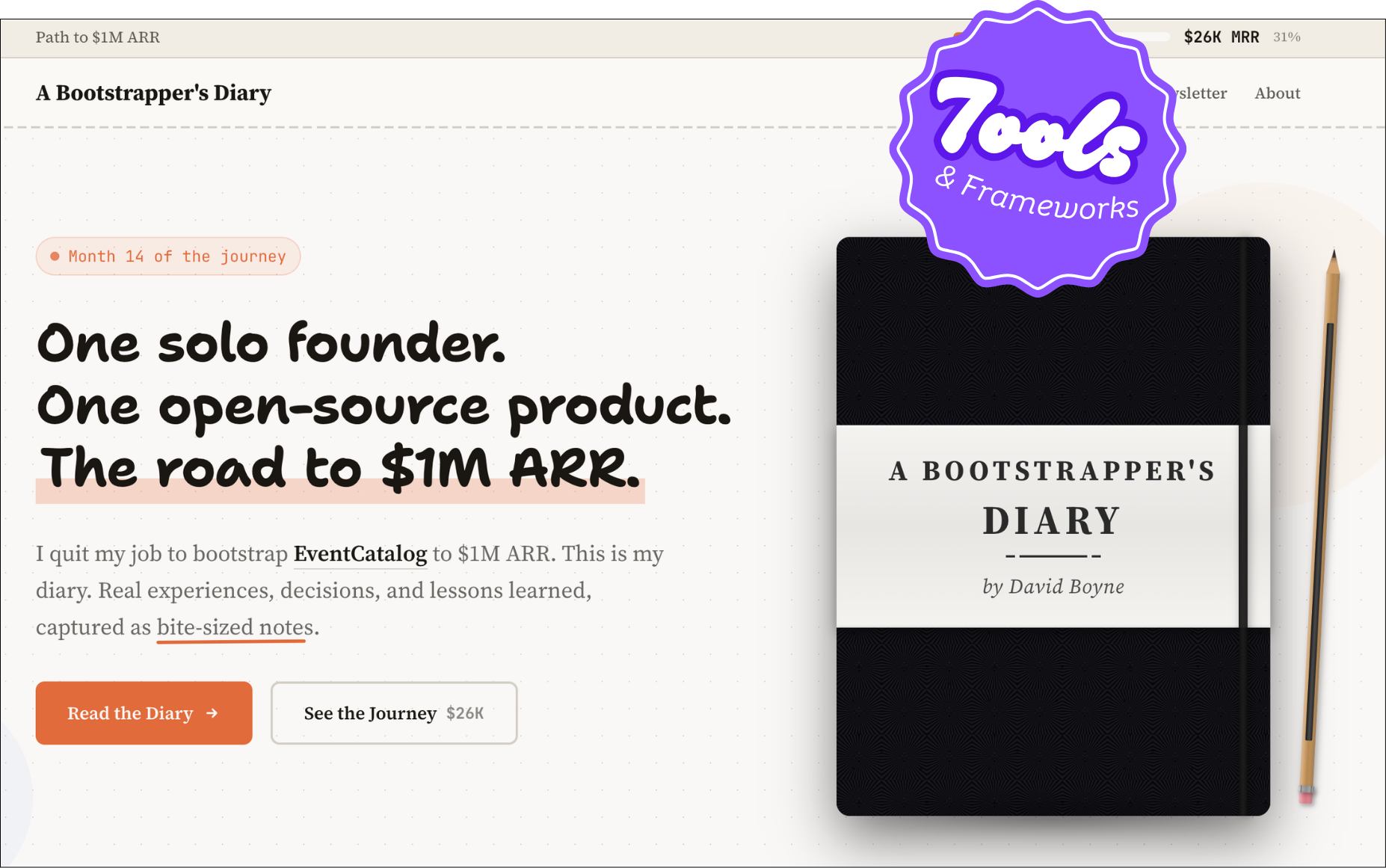
diary.boyney.io - David Boyne covers his solopreneur journey, real experiences, decisions, and lessons learned, captured as bite-sized notes.
😂 Just for Fun
This week’s “just for fun” post is by Michael Kisilenko on LinkedIn:
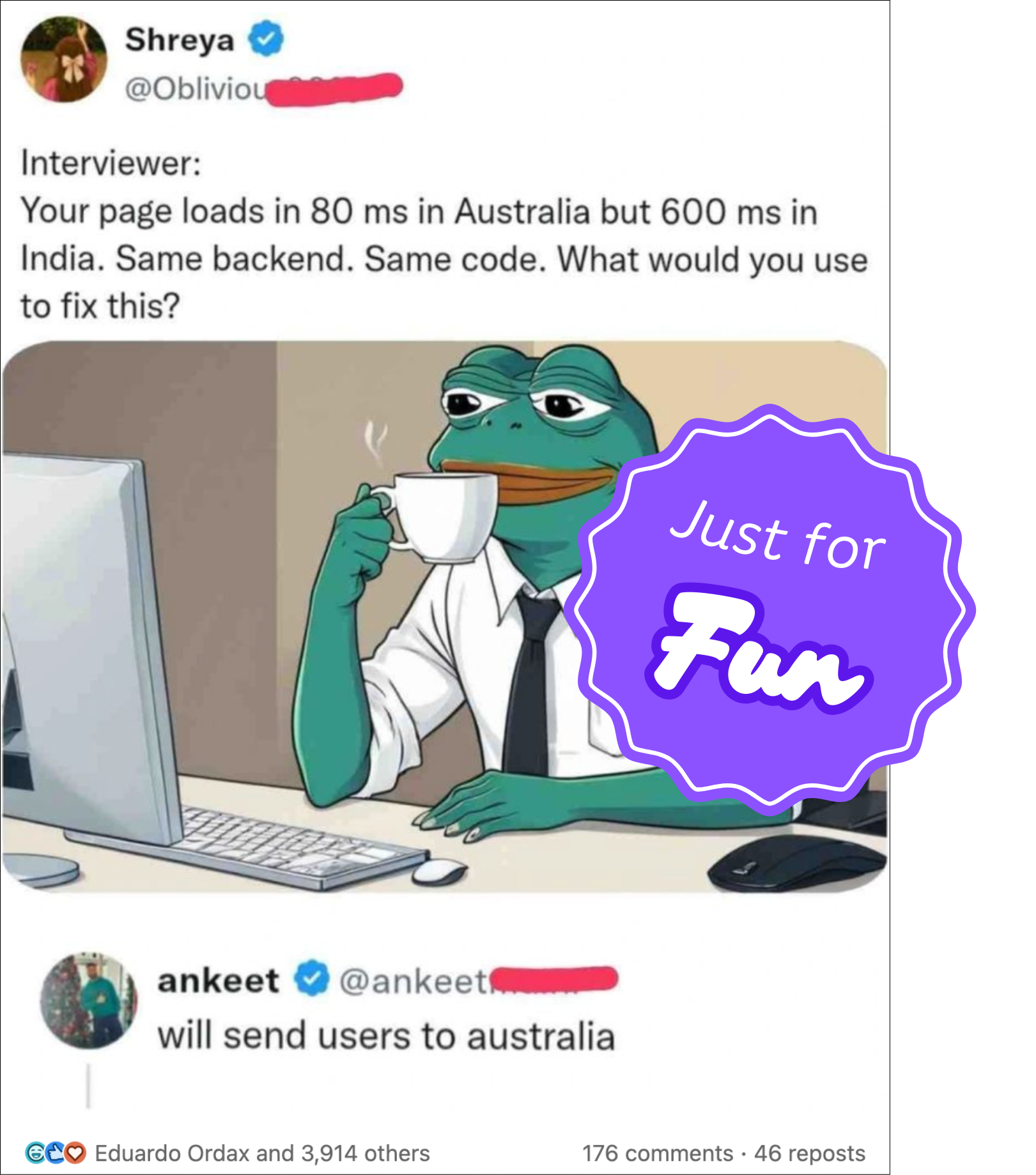
This reminded me of an AWS Certification exam question!
🎙️ YouTube & Podcasts
Here are some of my favourite videos and podcasts this week covering serverless, AI, architecture, and software engineering.

⭐ My favourite video this week was on the Lex Fridman channel asking “Will AI replace programmers?“.
Luca Mezzalira and Chris Fryer cover “A new framework for building micro-frontends“.
Serverless Office Hours discuss ‘AWS Step Functions Local Testing’.
The AWS Developers channel discuss “Building Smarter AI Agents: Memory Management with AgentCore“.
The Serverless Craic Episode 81 cover “AI - differentiator or commodity?”.
The Logicata podcast Season 5, Episode 6 covers: 'Security Groups, Space Centers, and Serverless Updates’.
The Tech By Nikita podcast covers ‘AWS Kiro & Spec-Driven Development‘.
The Modern Software Engineering channel has guest Gene Kim discussing ‘Skills Developers NEED In 2026 (Because Vibe Coding Changes Everything)‘.
Lex Fridman interviews Peter Steinberger (OpenClaw creator) and asks “Will AI replace programmers?“.
Marc Brooker discusses ‘Aurora DSQL: Serverless, Scalable, Global OLTP Database System‘.
Weekly Case Study 🔍
This week’s case study is by Twelve Labs.
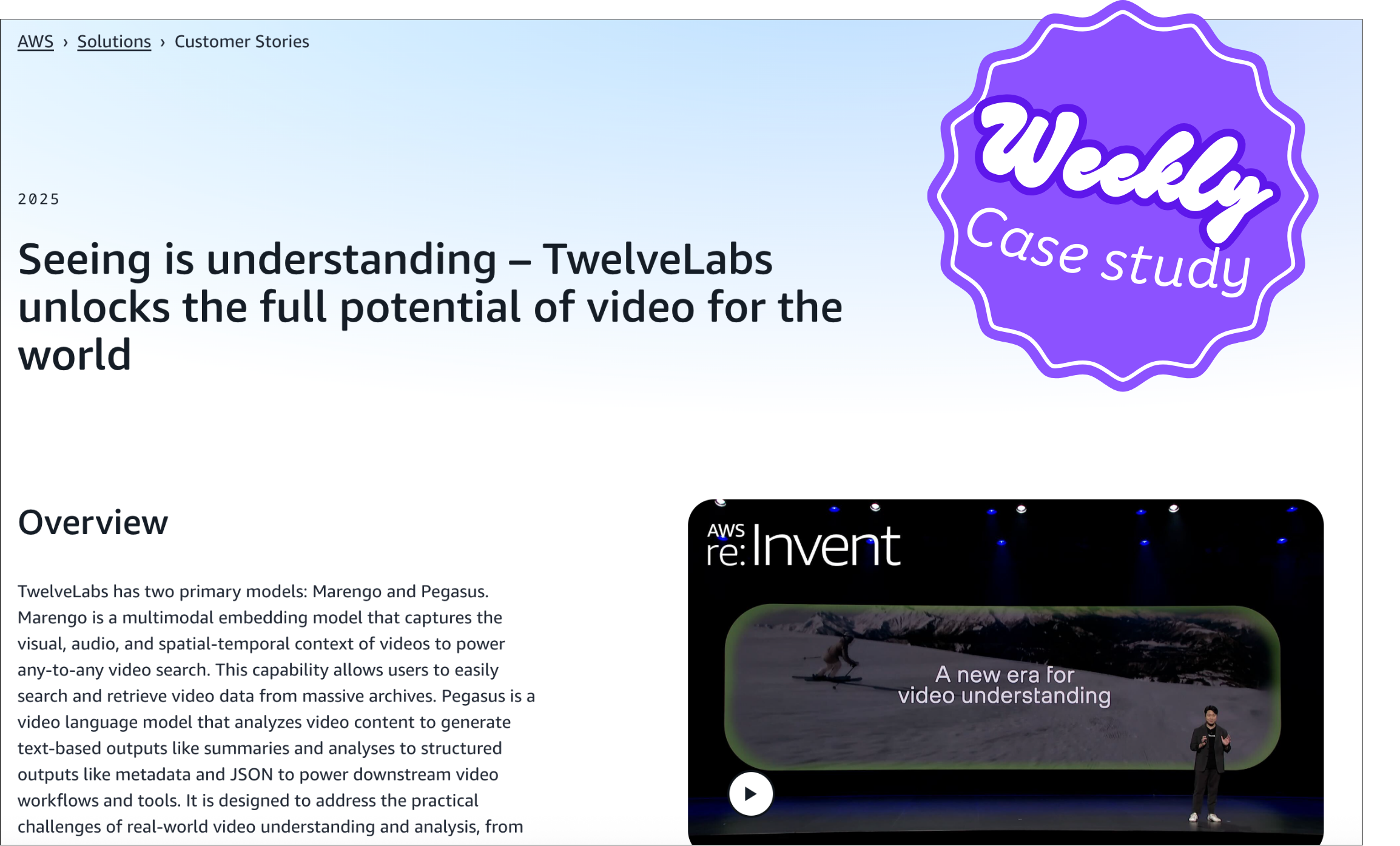
Twelve Labs utilises Amazon SageMaker HyperPod to train and scale its Marengo (multimodal embeddings) and Pegasus (video-to-text) foundation models, leveraging built-in resiliency to automatically replace faulty nodes and resume training sessions that span weeks across thousands of GPUs.
By integrating with Amazon S3 and Amazon Bedrock, the platform manages petabyte-scale video archives and generates billions of vector embeddings to enable sub-second semantic search and human-like perceptual reasoning. These technical optimisations have resulted in a 40% reduction in model training time and a 50% faster time-to-market, empowering enterprises to transform massive volumes of unstructured video data into actionable, searchable insights at global production scale.
🗣️ Inspirational Quotes and Thoughts
This week’s inspirational quote or thought is by British economist, Charles Goodhart:

“When a measure becomes a target, it ceases to be a good measure”
- Charles Goodhart (Goodhart’s Law)
I feel this is a trap organisations can fall into when it comes to using AI tooling and measuring productivity gains in lines of code produced. Lots of companies are trialling tooling and looking at its effectiveness, but for me personally, this should be measured in features produced and customer satisfaction, as opposed to how much code we can produce and how quickly.
In the wrong hands, it is easy to produce the latter, whilst not producing the former.
What are your own thoughts and experiences of this quote? Feel free to leave a comment below.
🗳️ Poll of the Week
In last week’s poll, we asked the question, “What do you use for sending emails in your solutions?”
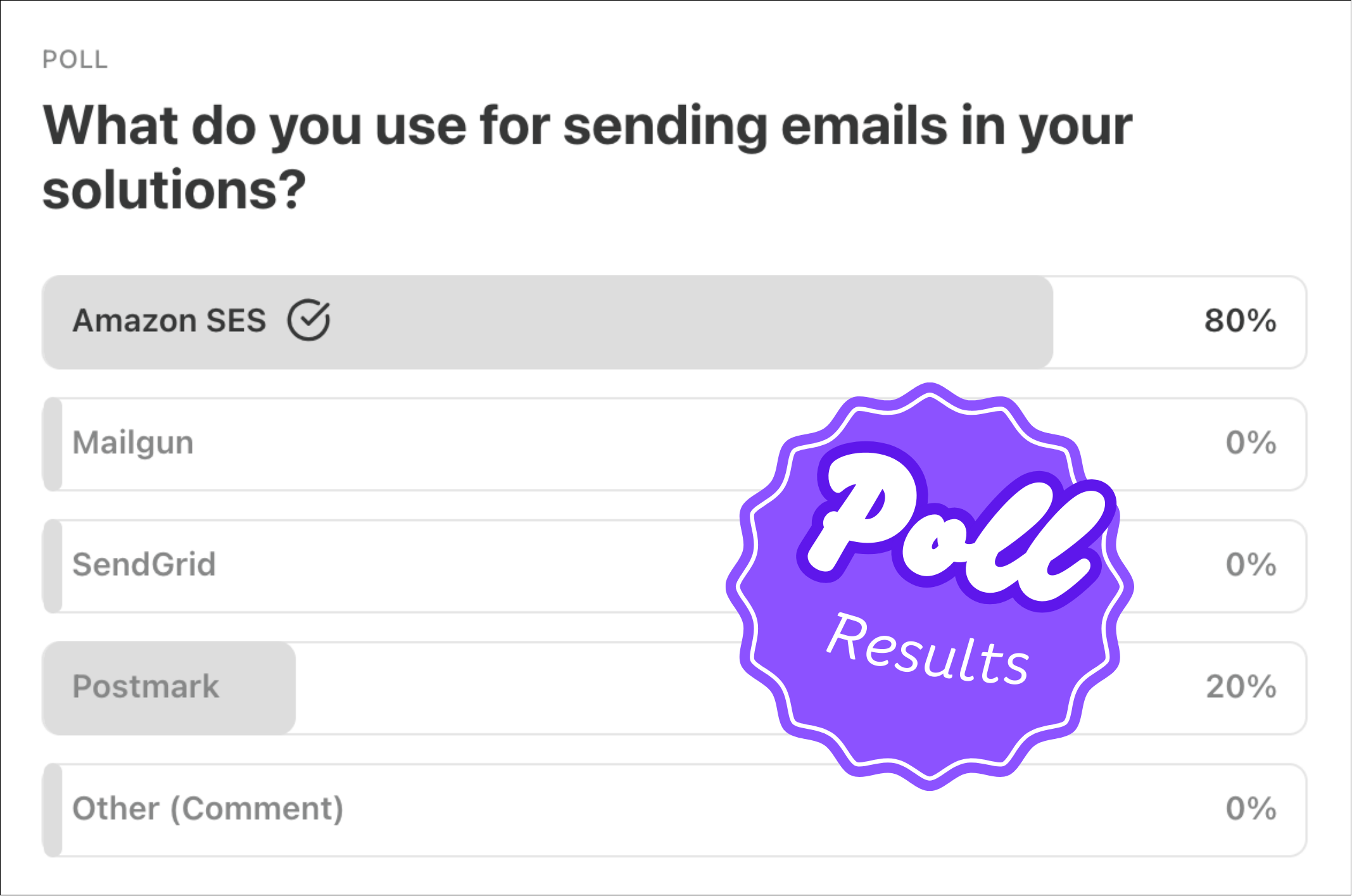
Interestingly, 80% said Amazon SES, and the remaining 20% saying Postmark. Personally, I am a fan of Amazon SES, and it has always fared me well once you are out of the sandbox!
This week, we ask the question: “What do you use for storing your code?”
Please feel free to leave a comment below on your answer.
📅 Serverless Events
The following serverless events are upcoming, so mark your calendars.
ACD Rajasthan - 28th Feb 2026.
ACD Romania - 23rd April 2026.
Would you happen to have any upcoming events that you would like to highlight? Message me below!
⭐ Spotlight
This week’s spotlight falls on AWS Principal Cloud Technologist Morgan Willis!

Morgan is a Principal Cloud Technologist at AWS, technical trainer, developer advocate, and content creator, whether that be on YouTube, Coursera, public speaking, live demos, and more! The fantastic content usually covers everything from agentic workloads to modern cloud architectures and emerging technologies. A great example of Morgan’s work is below (go give it a watch!)
Thank you for everything you do for our amazing AWS community!
Thank you for reading the latest Serverless Advocate Newsletter!
If you want to find out a little more about me, please have a look at:
https://www.serverlessadvocate.com/
See you next time,
Lee
